
railway-international.com
16
'25
Written on Modified on
Low-Floor Tram Technology Enters Service in Rostock
Rostocker Straßenbahn AG introduces a new generation of low-floor trams developed by Stadler, expanding accessible, digitally equipped urban rail transport in Rostock.
stadlerrail.com
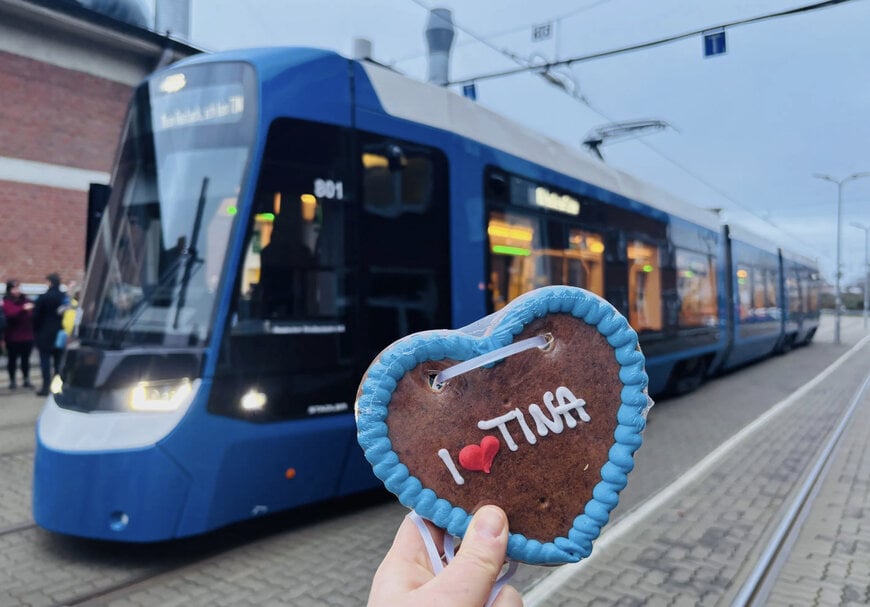
Rostocker Straßenbahn AG (RSAG) has placed a new low-floor tram platform into passenger service, marking a technical renewal of Rostock’s tram fleet with a focus on accessibility, operational efficiency and long-term capacity growth in urban public transport.
Fleet renewal driven by accessibility and capacity targets
The introduction of the new tram generation follows a multi-stage project that began in 2018 and included political approval processes, vehicle development, testing and commissioning. The vehicles are intended to support Rostock’s transport policy objective of increasing public transport’s modal share to 20%, while replacing ageing high-floor rolling stock approaching the end of its service life.
According to RSAG, the vehicles will initially operate on the city’s main tram lines 1 and 5, with additional units used for driver training. Passenger deployment follows an extensive test phase conducted prior to approval for regular service.
Technical concept and vehicle architecture
The trams are based on the TINA (Totally Integrated Low-Floor Drive) concept developed by Stadler. The design uses a continuous low-floor layout to enable step-free access throughout the vehicle, eliminating internal level changes and supporting compliance with accessibility requirements.
Each vehicle measures approximately 32 metres in length and has a total capacity of 216 passengers, including 75 seated places. Four multifunctional areas are designed to accommodate wheelchairs, prams and bicycles. Large panoramic windows and increased interior passage heights are intended to improve visibility and spatial perception for passengers.
Passenger systems and onboard equipment
The vehicles are equipped with passenger information monitors, video surveillance systems and cashless ticket vending machines. USB charging points are integrated into the passenger area, and Wi-Fi connectivity is scheduled to be activated from January 2026.
Climate control systems are designed for energy-efficient operation, contributing to passenger comfort while limiting environmental impact. Noise-reducing design measures and specially developed bogies aim to lower vibration and protect both wheelsets and track infrastructure.
Operational safety and driving assistance
From an operational perspective, the tram platform incorporates multiple driver assistance systems. These include collision protection functions intended to support drivers in complex urban traffic environments. The bogie design distributes loads more evenly, contributing to smoother running characteristics and reduced infrastructure wear over the vehicle lifecycle.
Procurement, funding and delivery schedule
RSAG has ordered a total of 30 vehicles. The overall investment volume for the fleet amounts to approximately €107 million. The State of Mecklenburg-Western Pomerania is contributing €11.75 million in funding, including an additional €2.3 million allocated to support procurement of the 30th vehicle.
Three trams have already been delivered to Rostock. Series deliveries are scheduled to continue from January 2026 through mid-2027. The new fleet will progressively replace non-modernised 6N1 vehicles built between 1994 and 1996, which are being withdrawn after around 30 years of operation.
Strategic context for regional mobility
The tram procurement represents the largest investment in RSAG’s history, following approval by the Rostock City Council in December 2020. The city has committed up to €30 million in equity contributions by 2029 to secure financing.
As part of Mecklenburg-Western Pomerania’s broader mobility strategy, the project is positioned as a long-term infrastructure measure supporting reliable, accessible and energy-efficient public transport in urban areas. The standardized low-floor platform and interoperable onboard systems also provide a technical basis for future network expansion and service optimization.
www.stadlerrail.com
