
railway-international.com
27
'26
Written on Modified on
Battery-Electric Multiple Units for Regional Rail Transport Decarbonization
Nahverkehr Westfalen-Lippe, Rock Rail, & Siemens Mobility deploy 61 Mireo Plus B battery trains to replace regional diesel rolling stock.
www.siemens.com
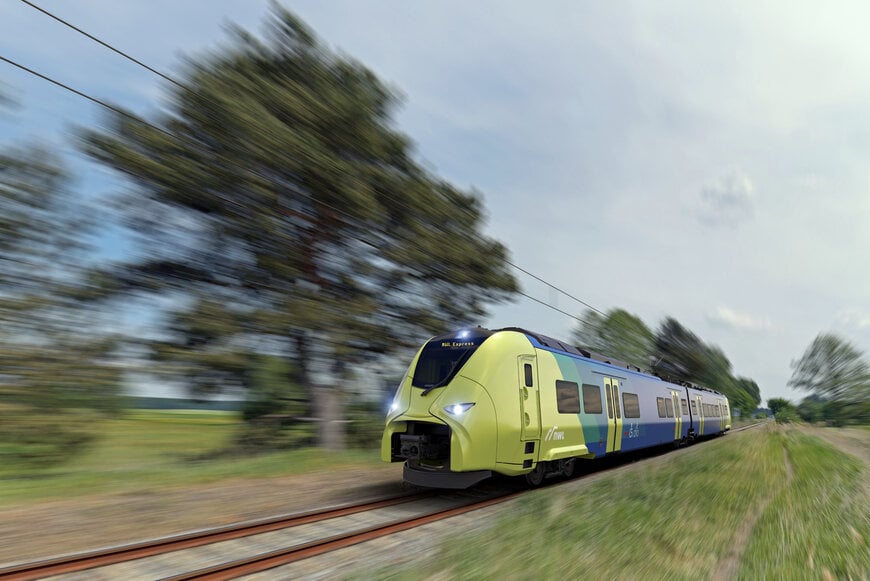
Regional transport authority Nahverkehr Westfalen-Lippe (NWL) has partnered with rolling stock financier Rock Rail and manufacturer Siemens Mobility to introduce 61 battery-electric multiple units (BEMUs) to the Northern Westphalia rail network. The joint project provides a coordinated fleet replacement program designed to eliminate diesel-powered passenger operations across non-electrified regional routes starting in December 2029.
Technical Partnership and Fleet Provisioning Framework
Deploying alternative propulsion systems across a high-frequency regional network requires long-term capital financing, dedicated vehicle manufacturing, and centralized transit authority oversight. Under this tripartite agreement, Siemens Mobility will manufacture the two-car Mireo Plus B trainsets, while Rock Rail finances the asset acquisition and leases the vehicles to NWL under a 30-year operational framework. NWL serves as the sole commissioning authority, retaining control over rolling stock deployment to decouple train availability and visual specifications from future changes in operating concessions.
Battery-Electric Propulsion and Energy Recovery Architecture
The Mireo Plus B platform utilizes hybrid overhead-wire and lithium-ion traction battery systems to traverse discontinuous electrification infrastructure. The trainsets draw electrical power from standard overhead catenary lines where available, simultaneously propelling the traction motors and recharging the onboard energy storage systems.
On unelectrified segments, an intelligent energy management system switches the power feed directly to the traction batteries. The vehicle architecture integrates regenerative braking mechanisms that capture kinetic energy during deceleration, feeding recovered current back into the battery cells to optimize overall energy efficiency. This alternative drive configuration eliminates local exhaust emissions and lowers trackside acoustic profiles compared to conventional diesel multiple units.
Network Implementation and Operational Parameters
The fleet will deliver approximately 7.1 million train kilometers per year across East Westphalia-Lippe and the Münsterland region, making it the second-largest battery-electric rail fleet in Germany. Phased delivery allows the transit network to transition unelectrified lines to electric traction without extensive trackside overhead line construction.
The two-car BEMU configurations feature step-free boarding access, multipurpose zones configured for two wheelchair spaces and 18 bicycles, onboard power and USB charging outlets, and integrated Wi-Fi infrastructure. By modernizing regional rail transport through localized battery storage and standardized fleet allocation, the partners establish a scalable operational baseline for decarbonizing unelectrified rail transit.
Edited by Natania Lyngdoh, Induportals editor, with AI assistance.
www.siemens.com
