
railway-international.com
07
'26
Written on Modified on
Railway Turnout Monitoring And Electro-Hydraulic Switch Actuation
Voestalpine Railway Systems couples its UNISTAR HR switch setting machine with zentrak condition monitoring to eliminate mechanical track failures.
www.voestalpine.com
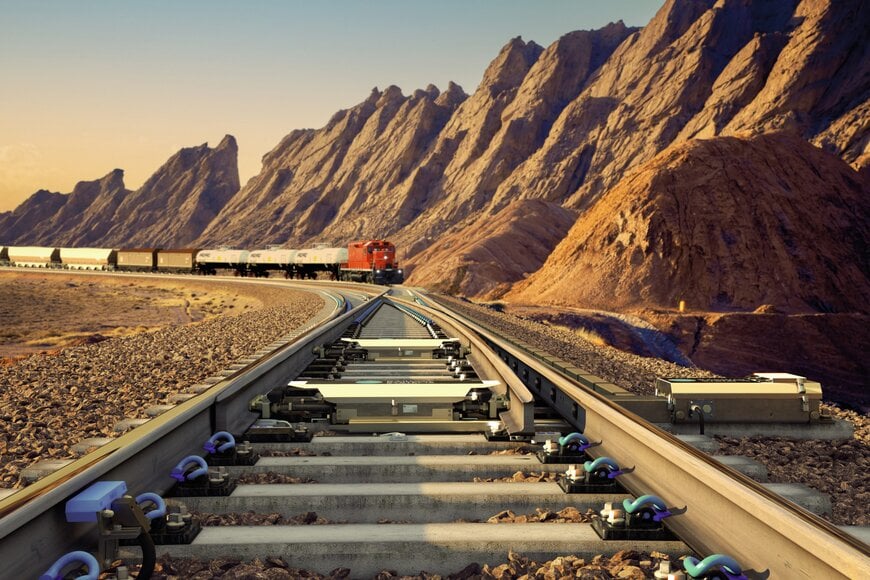
Railway track turnouts represent one of the most critical mechanical friction points in guided transport infrastructure, bearing extreme lateral dynamic loads while demanding pinpoint positioning accuracy. For railway infrastructure operators managing high-tonnage freight corridors, urban transit lines, and space-restricted metro tunnels, unexpected switch failures cause immediate line closures and costly delays. Resolving these operational vulnerabilities requires moving away from scheduled manual track inspections toward integrated electro-hydraulic actuation coupled with continuous, predictive condition monitoring.
Operating Principle And Electro-Hydraulic Design
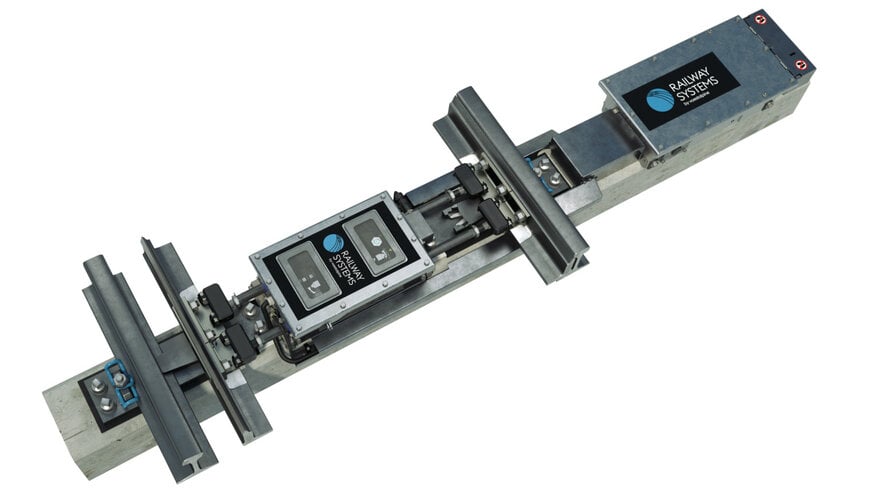
The UNISTAR HR switch setting system addresses track geometry constraints through a modular architecture that separates the drive mechanism, detection unit, and mechanical locking functions. At the core of the drive design is a central hydraulic unit capable of controlling up to four operating levels, allowing track engineers to configure throw mechanisms across diverse superstructure profiles, rail weights, and complex turnout layouts.
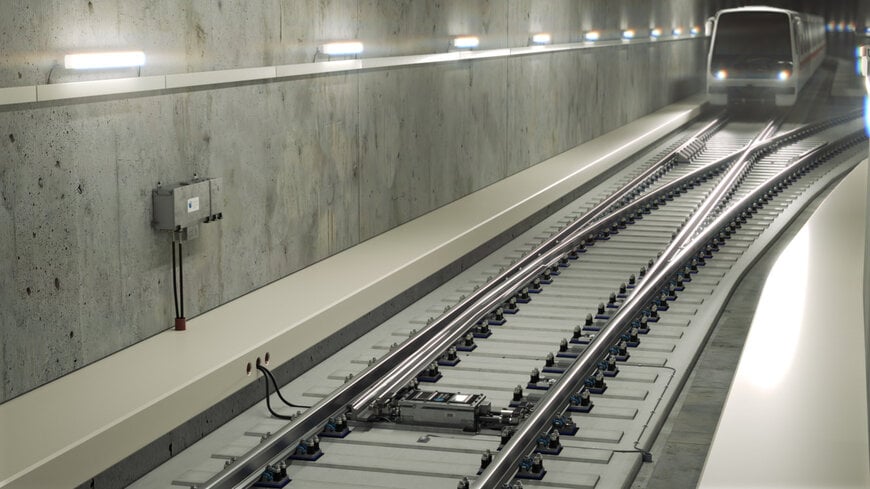
Separating mechanical functions allows infrastructure planners to install the drive unit directly between the rails (four-foot), beside the track bed, or anchored vertically along tunnel walls. The system is engineered to meet ingress protection ratings IP67 and IP68, preventing environmental contamination from track ballast dust, continuous immersion during heavy rain, and seasonal freeze-thaw cycles. In the event of track power loss or interlocking communication faults, integrated manual override mechanisms allow field crews to restore correct point alignment without specialized rigging tools.
Operational Deployment In Subarctic Heavy-Haul Corridors
Subarctic rail operations illustrate the severe operational challenges facing remote infrastructure. On the Quebec North Shore and Labrador Railway (QNS&L) in Canada, heavy-haul unit trains transport bulk iron ore across 414 kilometers connecting northern extraction sites to deepwater terminals on the St. Lawrence River. In this territory, track maintenance gangs face winter ambient temperatures dropping below minus forty degrees Celsius, heavy snowpack, and isolated rights-of-way accessible exclusively via aircraft or helicopter.
To prevent frozen point blades and hydraulic fluid crystallization, the UNISTAR HR platform deployed on the QNS&L line since 2016 incorporates specialized drive unit heating elements and hardened structural seals. Maintaining switch throwing force under subarctic snow and ice loading prevents switch point open-failure alarms, directly reducing emergency track repairs in inaccessible wilderness corridors.
Predictive Maintenance Through Switch Condition Monitoring
Deploying the mechanical actuator alongside zentrak SWITCH CONDITION MONITORING transforms the physical switch machine into an integrated diagnostic node designated as zentrak UNISTAR HR. Rather than relying on rigid calendar-based inspections, the monitoring system continuously logs operational parameters during every turnout throwing cycle.
By capturing real-time metrics such as hydraulic pressure curves, motor current consumption, stroke transit times, and micro-movements across the locking bars, the condition monitoring architecture establishes a dynamic operational baseline for each turnout. Degradation caused by switch tie shifting, lack of slide-chair lubrication, ballast settlement, or mechanical point obstruction creates distinct anomalies in current draw and stroke profiles. Identifying these deviations early allows engineering personnel to transition from reactive troubleshooting to planned, condition-based maintenance before switch blades fail to lock into the stock rail. The diagnostic interface utilizes standardized protocols compatible with existing railway interlocking architectures and multi-vendor track infrastructure.
Additional Context
This section details technical specifications and competitive benchmarking not included in the original product announcement.
Traditional railway point actuation relies heavily on electro-mechanical rack-and-pinion or rotary throw-rod machines. While electro-mechanical systems remain standard in conventional mainlines, they feature exposed linkage gears subject to mechanical wear, backlash, and environmental fouling from ice and debris. In contrast, electro-hydraulic actuators utilize sealed fluid circuits that protect mechanical interfaces, dampen dynamic shock loads imparted by passing wheelsets, and simplify multiple-point actuation across high-speed turnouts through multi-level hydraulic distribution.
Modern digital railway initiatives worldwide increasingly specify condition monitoring as a mandatory layer to eliminate trackside maintenance exposure. Standard railway automation frameworks prioritize non-intrusive sensor integration that retrofits onto active turnouts without invalidating safety-critical interlocking safety cases or signaling approvals. By continuously analyzing point machine current signatures and hydraulic pressure cycles, operators eliminate unnecessary manual track inspections, directly improving staff safety and maximizing track operational availability across high-density rail corridors.
Edited by Evgeny Churilov, Induportals Media - Adapted by AI.
www.voestalpine.com
