
railway-international.com
18
'26
Written on Modified on
Knorr-Bremse Wins Europe's First Digital Automatic Coupler Contract
Knorr-Bremse will equip ÖBB Rail Cargo Group freight trains with Digital Automatic Couplers for commercial operations.
www.knorr-bremse.com
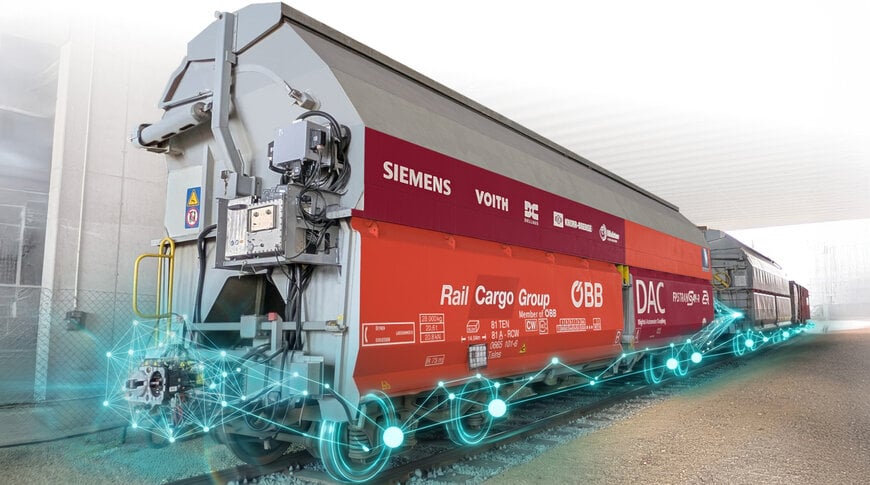
Knorr-Bremse has secured Europe’s first commercial equipment contract for Digital Automatic Couplers (DAC) from the ÖBB Rail Cargo Group. The technology will debut in daily fleet operations starting in 2028 as part of the EU-funded Pioneer Digital Automatic Coupling (PioDAC) project. For the initiative, Knorr-Bremse will equip an ÖBB train consisting of 23 freight cars and one locomotive with state-of-the-art DAC systems, integrating electronic control units and embedded sensors for the digital monitoring of vehicle functions and conditions.
The DAC technology replaces traditional manual screw couplings with a modern automated system that establishes continuous power and data connections throughout the entire train. This allows freight cars to be assembled and separated rapidly at the push of a button or via a tablet, eliminating labor-intensive physical procedures and significantly enhancing safety for shunting yard staff. By streamlining train formation and departure preparations, the innovation reduces turnaround times and strengthens the overall competitiveness of the European rail freight sector. For Knorr-Bremse, the automation and digitalization of rail freight—including the DAC and wireless fleet solutions like FreightControl Sentinel—represents a strategic growth market with an estimated annual revenue potential in the triple-digit million-euro range for original equipment in Europe.
Additional Context
This section provides technological and market background not explicitly detailed in the original release.
In the global rail freight industry, coupling technology remains a stark differentiator between regional networks. While North American heavy-haul operations utilize the mechanical Janney (AAR) knuckle coupler, European rail freight has historically relied on manual screw couplings and side buffers—a labor-intensive method dating back over a century. This legacy system requires yard personnel to physically step between railcars to manually connect heavy tension chains and pneumatic brake hoses, posing severe safety risks and creating a massive bottleneck in train assembly speed.
The European DAC initiative standardizes an automated latch coupler designed specifically for heavy freight. Beyond merely automating the mechanical and pneumatic linkage, the true breakthrough of a fully realized DAC (Type 5) is its integrated electrical and data bus. Providing a continuous power supply and high-speed data network across every car enables advanced Digital Freight Train (DFT) functions that were previously impossible on legacy rolling stock. These include automated brake testing, continuous train integrity monitoring, and real-time telematics—creating the essential digital backbone required to operate longer, heavier, and highly automated freight trains across the continent without requiring extensive physical track expansions.
Edited by Lekshman Ramdas, Induportals editor – adapted by AI.
www.knorr-bremse.com
