
railway-international.com
03
'26
Written on Modified on
DB Cargo Advances Predictive Maintenance with Automated Fleet Monitoring
SherLok platform combines real-time condition monitoring, remote diagnostics and automated maintenance workflows to improve locomotive availability, reduce costs and optimize fleet operations.
www.dbcargo.com
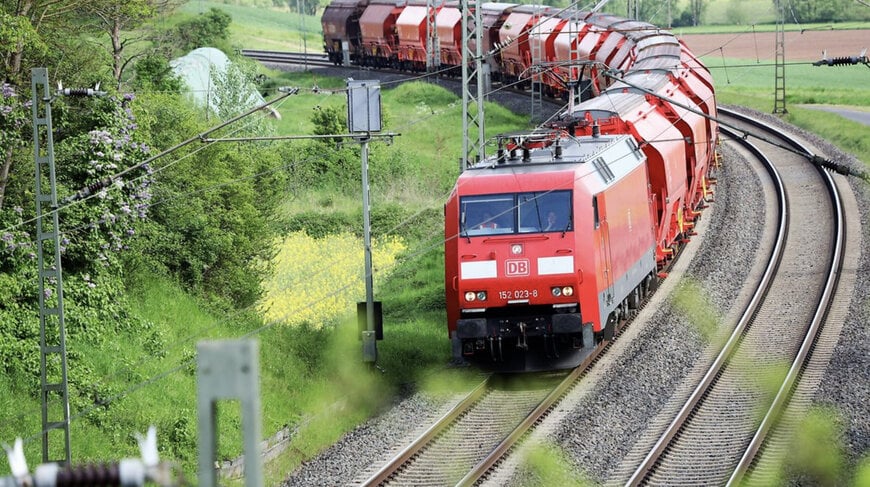
DB Cargo plans to optimize the availability of its locomotive fleet by deploying a predictive maintenance system that processes diagnostic data through intelligent algorithms. This digital rail ecosystem applies real-time monitoring technology to the freight transportation sector to detect component degradation and automate workshop planning.
Telemetry Integration And Remote Diagnostics Architecture
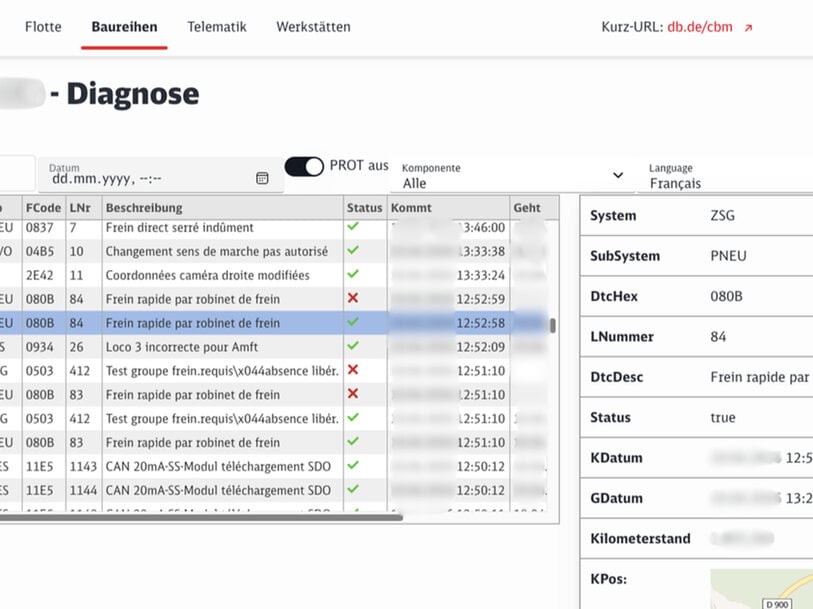
The enterprise utilizes an integrated application designated as SherLok to aggregate and process telemetry data from the entire locomotive fleet. The software processes vehicle status metrics including engine power output, operating temperatures, fuel consumption, and standardized diagnostic messages. This telemetry is continuously cross-referenced with geolocation tracking data and historical workshop records. Instead of requiring data scientists to execute specialized database queries, the web-based architecture permits authorized operational personnel to access diagnostic interfaces via mobile devices. This remote diagnostic capability enables technicians to evaluate component performance while locomotives operate under full load on the tracks, capturing stress data that cannot be replicated during stationary workshop inspections.
Algorithmic Processing And Automated Work Order Generation
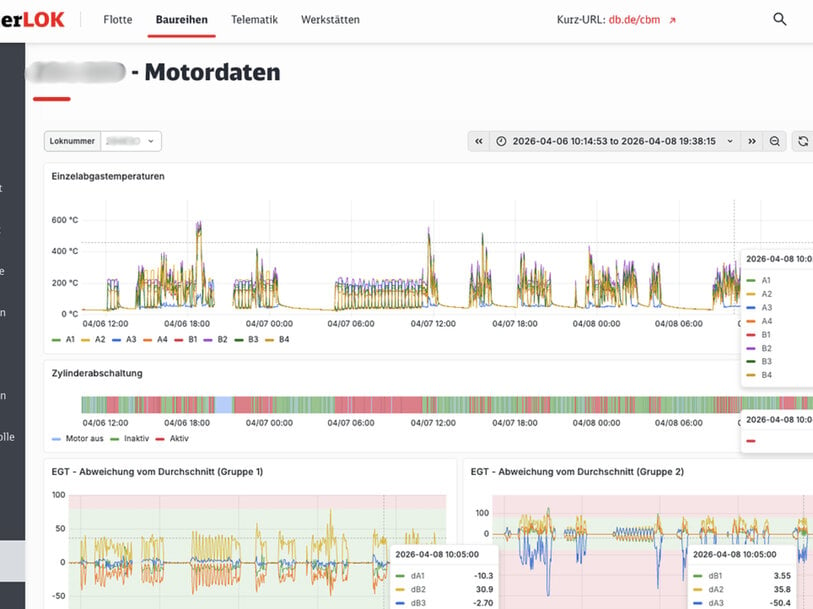
The condition monitoring framework applies specific algorithms to the aggregated time-series data to identify maintenance requirements before structural component failure occurs. When the processing system detects a performance anomaly, it triggers corresponding maintenance protocols directly within the enterprise management software. Work orders are generated automatically without manual data entry or administrative delays. By providing a continuous overview of the rolling stock, workshop teams and mobile maintenance units receive precise diagnostic information prior to the physical arrival of the locomotive. This advance data transmission permits the pre-allocation of specific materials and the scheduling of technical personnel, directly reducing asset downtime and lowering operational maintenance costs across the rail freight network.
Additional Context:
This section details technical specifications and competitive benchmarking not included in the original product announcement
In the railway asset management sector, predictive maintenance systems are evaluated on parameters such as sensor integration capacity, data processing latency, and automated diagnostic accuracy. Comparable condition monitoring platforms include Siemens Mobility Railigent and Alstom HealthHub. Standard benchmarking for these systems prioritizes the ability to analyze high-frequency time-series data from multiple locomotive subsystems simultaneously to predict failure intervals. A critical differentiator among these platforms is the degree of enterprise resource planning integration; systems that autonomously generate work orders and pre-order components demonstrate higher operational efficiency than standalone diagnostic dashboards. The transition from mileage-based scheduled maintenance to condition-based automated interventions represents the established baseline for rail operators seeking to maximize rolling stock utilization.
Edited by Natania Lyngdoh, Induportals editor, assisted by AI.
www.dbcargo.com
