
railway-international.com
10
'26
Written on Modified on
Hitachi Rail Expands ETCS Level 2 Deployment Across South East Queensland Rail Network
Digital signalling rollout advances on the Brisbane–Gold Coast corridor to improve rail capacity, safety and network performance across South East Queensland.
www.hitachirail.com
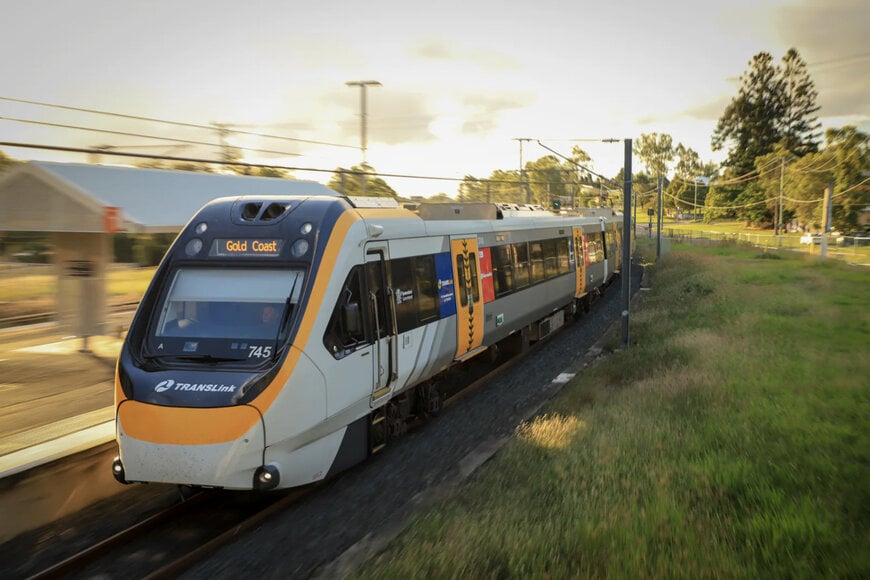
Hitachi Rail has partnered with the Queensland Department of Transport and Main Roads and Queensland Rail to extend the deployment of European Train Control System Level 2 (ETCS L2) digital signalling technology. The collaboration focuses on upgrading the South East Queensland passenger rail network, specifically targeting the Brisbane to Gold Coast transport corridor, to enhance operational capacity and safety through advanced train control systems.
Modernising the South East Queensland Digital Rail Network
The implementation phase involves the section between Kuraby and Beenleigh stations on the Gold Coast line, which forms a critical segment of the regional transport infrastructure. More than 200 kilometres of passenger rail corridors are undergoing upgrades to transition from legacy signalling to digital frameworks. This deployment aims to support the economic requirements of the region by enabling more frequent and reliable rail services, particularly in preparation for the increased transit demands associated with the Brisbane 2032 Olympic and Paralympic Games.
Technical Implementation of ETCS L2 Signalling Systems
ETCS Level 2 operates via continuous radio-based communications between the train and a Radio Block Centre, combined with trackside balises that provide exact train positioning data. This mechanism eliminates the reliance on traditional trackside optical signals and enforces automatic train protection by continuously calculating safe maximum speed profiles. Prior to the Kuraby and Beenleigh extension, Hitachi Rail installed ETCS L2 infrastructure on the Shorncliffe line in Brisbane's north. This initial segment is currently in the system testing and staff training phase, which involves validating data exchange, testing transitions between ETCS Level 0 and Level 2, and verifying integration with interlocking subsystems before passenger service commences. Simultaneous construction and installation activities are progressing on Brisbane's south side and between Beenleigh and Varsity Lakes stations.
Integrated Traffic and Possession Management Capabilities
Beyond the core ETCS L2 deployment, the project scope includes the development of supplementary network management tools. Hitachi Rail Managing Director of Australia and New Zealand, Sarfaraz Samnakay, stated that the company is developing a Traffic Management System for the entire South East Queensland network, alongside a Possession Management System. The Possession Management System is engineered to control network access for maintenance crews, thereby enhancing track safety during engineering works. These software platforms integrate with the ETCS L2 hardware to form the operational infrastructure of the upgraded railway system. The execution of this project leverages over 20 years of ETCS deployment experience across markets including the United Kingdom, Europe, China, and Australia.
Additional Context:
This section details technical specifications and competitive benchmarking not included in the original product announcement
ETCS Level 2 is a standardised European Rail Traffic Management System protocol adopted globally to ensure interoperability across different railway networks. In the global market for autonomous and digital train control systems, Hitachi Rail competes with other major suppliers such as Siemens Mobility, which offers the Trainguard system, and Alstom, which provides the Atlas system. Benchmarking of ETCS Level 2 solutions typically focuses on objective technical criteria, including the processing capacity of the Radio Block Centre, the latency of handover protocols between radio networks, adherence to the latest Baseline specifications, and the ability to interface seamlessly with existing legacy Class B signalling systems via Specific Transmission Modules. By standardizing the communication interfaces between trackside infrastructure and onboard vehicle computers, ETCS Level 2 implementations systematically reduce the maintenance overhead associated with physical wayside equipment while mathematically increasing route capacity through dynamic headway management.
Edited by Natania Lyngdoh, Induportals editor, assisted by AI.
www.hitachirail.com
