
railway-international.com
30
'26
Written on Modified on
Deployment of Next-Generation High-Speed Rolling Stock in Rail Infrastructure
SNCF Voyageurs and Alstom establish a joint industrial schedule for the validation and phased deployment of the TGV-M digital infrastructure network.
www.alstom.com
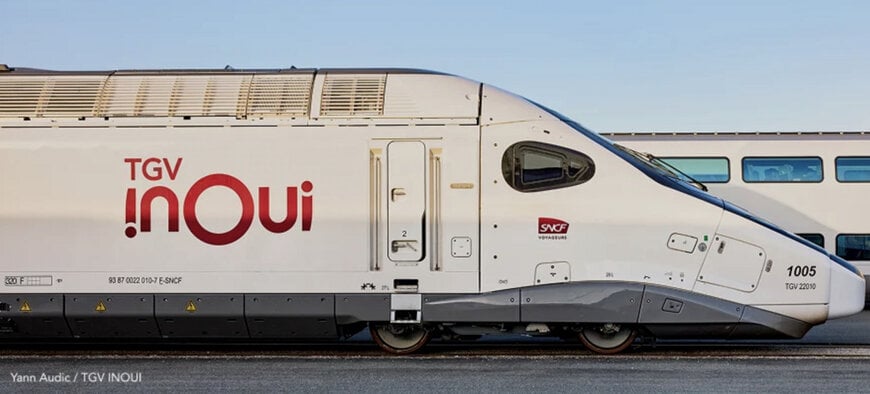
SNCF Voyageurs and Alstom have finalized the authorization and deployment strategy for the TGV-M high-speed train platform. Following the submission of the technical admission dossier to the European Union Agency for Railways (ERA) in December 2025, the rolling stock is transitioning into operational commissioning on the French national rail network.
Technical Standardization and Network Integration Challenges
Integrating a new generation of high-speed rolling stock into existing digital infrastructure requires extensive validation of subsystem interoperability. The primary technical challenge lies in aligning vehicle-to-infrastructure communication protocols and ensuring compliance with European Rail Traffic Management System (ERTMS) standards under real-world operational variables.
To manage this systemic complexity, a cooperative engineering framework was required. Alstom provides the manufacturing and traction microarchitecture, while SNCF Voyageurs manages network operations, track-side interface validation, and driver-machine interface integration.
Aerodynamic and Structural Parameters
The technical architecture of the TGV-M incorporates structural design modifications to optimize energy efficiency and maintenance lifecycles. The vehicle design features a specialized aerodynamic nose profile, which reduces aerodynamic drag by 20%.
The rolling stock accommodates up to 740 passengers per trainset, representing a 20% increase in capacity through optimized interior spatial allocation. Material selection focus yields a 97% recyclability rate for the overall structure and 90% for the passenger seating units. Mechanically, the architecture achieves a 32% reduction in carbon dioxide emissions and a 30% reduction in baseline maintenance costs compared to preceding high-speed train generations.
Phased Delivery and Pre-Commercial Testing Logistics
The joint industrial plan specifies a phased delivery timeline starting in the second half of 2026:
- June 2026: Delivery of the initial two trainsets for track synchronization.
- August 2026: Cumulative delivery reaching six operational units.
- December 2026: Scaled integration totaling 13 trainsets on the network.
Deployment of Next-Generation High-Speed Rolling Stock in Rail Infrastructure
SNCF Voyageurs and Alstom establish a joint industrial schedule for the validation and phased deployment of the TGV-M digital infrastructure network. SNCF Voyageurs and Alstom have finalized the authorization and deployment strategy for the TGV-M high-speed train platform. Following the submission of the technical admission dossier to the European Union Agency for Railways (ERA) in December 2025, the rolling stock is transitioning into operational commissioning on the French national rail network.
Technical Standardization and Network Integration Challenges
Integrating a new generation of high-speed rolling stock into existing digital infrastructure requires extensive validation of subsystem interoperability. The primary technical challenge lies in aligning vehicle-to-infrastructure communication protocols and ensuring compliance with European Rail Traffic Management System (ERTMS) standards under real-world operational variables.
To manage this systemic complexity, a cooperative engineering framework was required. Alstom provides the manufacturing and traction microarchitecture, while SNCF Voyageurs manages network operations, track-side interface validation, and driver-machine interface integration.
Aerodynamic and Structural Parameters
The technical architecture of the TGV-M incorporates structural design modifications to optimize energy efficiency and maintenance lifecycles. The vehicle design features a specialized aerodynamic nose profile, which reduces aerodynamic drag by 20%.
The rolling stock accommodates up to 740 passengers per trainset, representing a 20% increase in capacity through optimized interior spatial allocation. Material selection focus yields a 97% recyclability rate for the overall structure and 90% for the passenger seating units. Mechanically, the architecture achieves a 32% reduction in carbon dioxide emissions and a 30% reduction in baseline maintenance costs compared to preceding high-speed train generations.
Phased Delivery and Pre-Commercial Testing Logistics
The joint industrial plan specifies a phased delivery timeline starting in the second half of 2026. The deployment begins in June 2026 with the delivery of the initial two trainsets for track synchronization. Delivery scales up in August 2026 to reach a cumulative total of six operational units, before concluding the initial rollout phase in December 2026 with a total of 13 trainsets integrated onto the network.
Before commercial passenger service begins, the companies will execute a multi-week pre-commercial testing phase on the national rail network. This operational phase serves to validate onboard digital systems, refine real-world traction control algorithms, and finalize technical adjustments under dynamic load conditions.
Connected Systems and Operational Applications
The TGV-M platform operates as a fully connected system, utilizing an optimized onboard network infrastructure designed to ingest future digital upgrades. The communication layer processes real-time telemetry from the train to enable predictive maintenance, reducing unscheduled depot interventions and streamlining depot diagnostics.
The primary application area focuses on high-speed passenger transit for the TGV INOUI service. A total of 160 trainsets have been ordered to scale this digital infrastructure, with 130 units allocated to SNCF Voyageurs and 30 units assigned to its Eurostar subsidiary. Passenger operations are scheduled to commence in September 2026, following the completion of the summer pre-commercial infrastructure validation loops.
Edited by Maria Brueva, Induportals editor – adapted by AI.
www.alstom.com
SNCF Voyageurs and Alstom establish a joint industrial schedule for the validation and phased deployment of the TGV-M digital infrastructure network. SNCF Voyageurs and Alstom have finalized the authorization and deployment strategy for the TGV-M high-speed train platform. Following the submission of the technical admission dossier to the European Union Agency for Railways (ERA) in December 2025, the rolling stock is transitioning into operational commissioning on the French national rail network.
Technical Standardization and Network Integration Challenges
Integrating a new generation of high-speed rolling stock into existing digital infrastructure requires extensive validation of subsystem interoperability. The primary technical challenge lies in aligning vehicle-to-infrastructure communication protocols and ensuring compliance with European Rail Traffic Management System (ERTMS) standards under real-world operational variables.
To manage this systemic complexity, a cooperative engineering framework was required. Alstom provides the manufacturing and traction microarchitecture, while SNCF Voyageurs manages network operations, track-side interface validation, and driver-machine interface integration.
Aerodynamic and Structural Parameters
The technical architecture of the TGV-M incorporates structural design modifications to optimize energy efficiency and maintenance lifecycles. The vehicle design features a specialized aerodynamic nose profile, which reduces aerodynamic drag by 20%.
The rolling stock accommodates up to 740 passengers per trainset, representing a 20% increase in capacity through optimized interior spatial allocation. Material selection focus yields a 97% recyclability rate for the overall structure and 90% for the passenger seating units. Mechanically, the architecture achieves a 32% reduction in carbon dioxide emissions and a 30% reduction in baseline maintenance costs compared to preceding high-speed train generations.
Phased Delivery and Pre-Commercial Testing Logistics
The joint industrial plan specifies a phased delivery timeline starting in the second half of 2026. The deployment begins in June 2026 with the delivery of the initial two trainsets for track synchronization. Delivery scales up in August 2026 to reach a cumulative total of six operational units, before concluding the initial rollout phase in December 2026 with a total of 13 trainsets integrated onto the network.
Before commercial passenger service begins, the companies will execute a multi-week pre-commercial testing phase on the national rail network. This operational phase serves to validate onboard digital systems, refine real-world traction control algorithms, and finalize technical adjustments under dynamic load conditions.
Connected Systems and Operational Applications
The TGV-M platform operates as a fully connected system, utilizing an optimized onboard network infrastructure designed to ingest future digital upgrades. The communication layer processes real-time telemetry from the train to enable predictive maintenance, reducing unscheduled depot interventions and streamlining depot diagnostics.
The primary application area focuses on high-speed passenger transit for the TGV INOUI service. A total of 160 trainsets have been ordered to scale this digital infrastructure, with 130 units allocated to SNCF Voyageurs and 30 units assigned to its Eurostar subsidiary. Passenger operations are scheduled to commence in September 2026, following the completion of the summer pre-commercial infrastructure validation loops.
Edited by Maria Brueva, Induportals editor – adapted by AI.
www.alstom.com
