
railway-international.com
28
'26
Written on Modified on
Thermal and Pneumatic Control Architectures for Rail Systems
Parker Hannifin presents fluid conveyance and motion control technologies engineered to optimize fleet availability and energy efficiency within demanding transportation environments.
www.parker.com

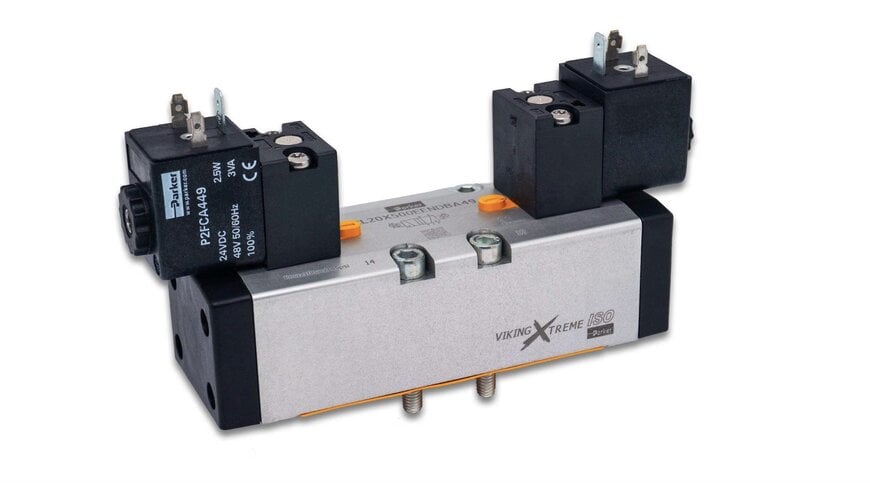
Parker Hannifin showcased its rail-specific pneumatic, thermal, and fluid control hardware, including the Viking Xtreme ISO valve series, at the InnoTrans 2026 exhibition. These integrated hardware solutions manage power distribution and mechanical actuation for rolling stock, targeting original equipment manufacturers and system integrators within the transit sector.
Managing Complex Transportation Architectures
At the InnoTrans 2026 trade fair (22nd – 25th September, Hall 10.2, Booth 220), engineers have demonstrated how integrated mechanical systems address the operational pressure to increase railway punctuality and reduce the total cost of ownership. Modern rail vehicles require highly reliable power and thermal management systems to ensure continuous operation. Optimizing these structural connections stabilizes fleet availability and supports broader industry targets for energy efficiency and decarbonization.
Pneumatic Actuation and EN 45545 Compliance
The technical deployment features the Viking Xtreme ISO valve series, constructed to maintain consistent flow rates and pressure regulation under severe environmental conditions. The engineering portfolio also encompasses integrated pneumatic systems dedicated to governing air suspension mechanics and auxiliary locomotive functions. All distributed fluid connectors, quick couplers, and related hardware must comply with strict regulatory frameworks, notably the EN 45545 standard, which dictates rigorous fire safety and material flammability limits for railway vehicles.
Lifecycle Integration and Diagnostic Capabilities
Incorporating inertial measurement units alongside traditional pneumatic hardware enables precise motion tracking and structural diagnostics, facilitating improved maintainability during both new builds and retrofit programs. "Our technologies help customers meet technical, regulatory, and operational requirements while supporting decarbonization, maintainability, and availability across the full lifecycle of rail assets," said Andreas Lengsfeld, Account Manager – Railway Technologies at Parker Hannifin. Establishing standardized, traceable components limits supply chain volatility and ensures consistent structural integrity across extended asset lifecycles.
Additional Context
This section details technical specifications and competitive benchmarking not included in the original news release.
Within the railway component engineering sector, pneumatic valves and fluid conveyance systems are routinely benchmarked against equivalent hardware from suppliers such as Norgren and SMC Corporation. Objective performance criteria for these modules include extreme temperature operating ranges (typically -40°C to +60°C for rail applications), ingress protection ratings, and mean time between failures (MTBF) often exceeding tens of millions of actuation cycles. Furthermore, integrating diagnostic sensors into pneumatic architectures supports the modern digital supply chain, enabling fleet operators to transition from reactive component replacement to predictive asset management based on measurable mechanical stress data.
Edited by Aishwarya Mambet, Induportals Editor, with AI assistance.
www.parker.com
