
railway-international.com
29
'26
Written on Modified on
Hydrogen fuel cell electric multiple units for Romanian regional rail
Romania’s Railway Reform Authority contracts Siemens Mobility for hydrogen-powered regional trains and long-term maintenance.
www.siemens.com
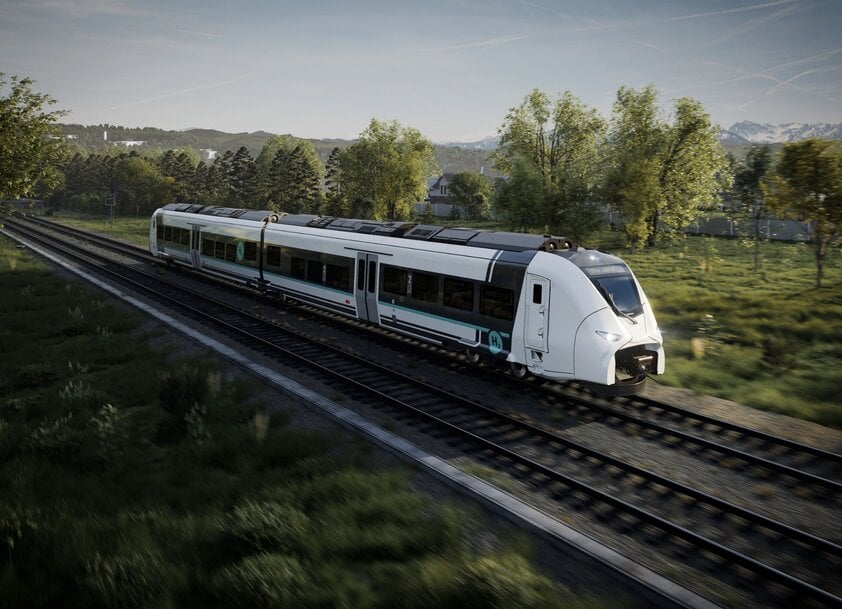
The Railway Reform Authority (ARF) has contracted the delivery of 12 two-car hydrogen-powered electric multiple units to modernize regional passenger services and reduce carbon emissions. These units utilize a fuel cell-based propulsion system to replace diesel-powered rolling stock on the Romanian rail network.
Technical Specifications and Propulsion
The trainsets are based on a standardized vehicle platform designed for high energy efficiency and reduced component complexity.
- Propulsion System: Hydrogen fuel cell-based electric propulsion complemented by battery energy storage.
- Energy Management: Batteries are charged via the fuel cell system or through regenerative braking.
- Performance: Maximum operating speed of 120 km/h.
- Configuration: Articulated two-unit trainsets with 131 fixed seats and 5 folding seats.
- Scalability: Units support multiple traction of up to two coupled trainsets.
Safety and Information Systems
The rolling stock integrates standard European protection and communication technologies.
The rolling stock integrates standard European protection and communication technologies.
- Train Protection: Equipped with PZB (intermittent train control) and the European Train Control System (ETCS).
- Passenger Interface: Digital passenger information system utilizing interior and exterior displays alongside automated announcements.
Maintenance and Service Infrastructure
The agreement includes a full-service maintenance package for an initial 15-year term, with an option for a 15-year extension.
The agreement includes a full-service maintenance package for an initial 15-year term, with an option for a 15-year extension.
- Local Operations: Maintenance activities will be conducted in Romania, including a dedicated facility in Bucharest.
- Digital Management: Utilization of the Railigent X system for digital maintenance and fleet optimization.
- Service Scope: Includes preventive and corrective maintenance, overhauls, and full Entity in Charge of Maintenance (ECM) responsibility.
Environmental Impact
The transition to hydrogen propulsion is projected to achieve energy savings of up to 25% compared to conventional systems. By eliminating local emissions and reducing noise, the platform supports national sustainability objectives through the replacement of diesel units. The trains are scheduled to enter passenger service in 2029.
Edited by Romila DSilva, Induportals Editor, with AI assistance.
The transition to hydrogen propulsion is projected to achieve energy savings of up to 25% compared to conventional systems. By eliminating local emissions and reducing noise, the platform supports national sustainability objectives through the replacement of diesel units. The trains are scheduled to enter passenger service in 2029.
Edited by Romila DSilva, Induportals Editor, with AI assistance.
