
railway-international.com
09
'26
Written on Modified on
Arup Advances Coventry Very Light Rail Demonstrator Route
A city-centre test route will evaluate shallow track systems and battery-powered vehicles designed to reduce construction time, installation costs, and disruption in urban transport infrastructure.
www.arup.com
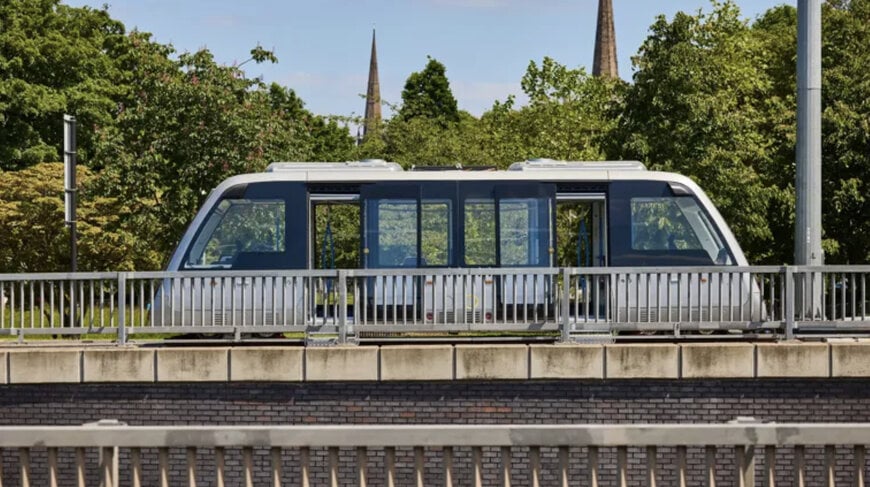
Urban rail transport solutions for city mobility
In urban mobility planning and public transport infrastructure, cities are exploring rail systems that can be deployed faster and at lower cost than conventional light rail networks. One approach being tested in the United Kingdom is the Coventry Very Light Rail (CVLR) system, a rail-based urban transport concept designed to simplify installation and reduce infrastructure complexity.
Arup has appointed engineering consultancy Tony Gee as a strategic partner for the design of the next phase of the Coventry Very Light Rail programme. The collaboration will support the development of an 800-metre twin-track demonstrator route in Coventry city centre, where the system will operate in live traffic conditions.
The demonstrator route will allow engineers and city planners to evaluate the construction, integration, and operational performance of the CVLR system within an existing urban environment.
Lightweight vehicles and shallow track installation
The Coventry Very Light Rail concept differs from conventional light rail systems in several technical aspects intended to reduce installation complexity and construction time.
The system uses lightweight rail vehicles powered by onboard batteries, eliminating the need for overhead electrical lines. This design simplifies infrastructure requirements and reduces the visual and structural impact on urban streets.
The rail track system is installed at a depth of approximately 30 cm beneath the road surface, significantly shallower than traditional light rail track structures. This shallow trackform reduces the need to relocate underground utilities such as water pipes, telecommunications cables, and electrical conduits, which are typically a major source of cost and construction delays in urban rail projects.
By reducing excavation depth and avoiding large-scale utility diversion, the installation process is intended to shorten construction schedules and minimize disruption to city traffic and businesses.
Demonstrator route for system validation
The new demonstrator route will operate through Coventry city centre and connect to Coventry University’s Technology Park. Running the system in a real urban environment will allow project partners to collect data on multiple aspects of system performance.
These include construction methods, track installation techniques, vehicle integration, and operational behaviour within live traffic conditions. The data collected will inform future development of the system and support planning for a first commercial CVLR route in the city.
The project also involves detailed engineering work covering civil infrastructure, track design, systems integration, and urban environment interfaces, ensuring the rail system can operate within the constraints of existing streets and transport networks.
Supporting sustainable urban transport development
The broader Coventry Very Light Rail programme aims to provide cities with a rail-based transport option that can be deployed at less than half the cost and in approximately half the construction time compared with traditional light rail systems.
If proven successful, the concept could provide urban areas with an alternative public transport system that supports reduced congestion, improved air quality, and increased accessibility to employment and education.
Because the system integrates with existing road infrastructure and requires fewer structural modifications, it may also provide a more practical option for cities with dense underground utility networks.
Next phase of development toward commercial deployment
The Coventry demonstrator route is scheduled for completion by summer 2027. Once operational, the system will provide a full-scale test platform for validating the CVLR technology before wider deployment.
By combining innovative vehicle design, simplified track construction, and real-world testing within a city environment, the project aims to demonstrate how lightweight rail systems could be integrated into future urban transport networks.
www.arup.com
Edited by Industrial Journalist, Natania Lyngdoh.
Powered by AI.
