
railway-international.com
13
'26
Written on Modified on
Railway Turnout Electro-Hydraulic Point Machine Technology
Voestalpine Railway Systems ECOSTAR 5.0 delivers integrated condition monitoring to resolve turnout maintenance downtime across mainline rail networks.
www.voestalpine.com
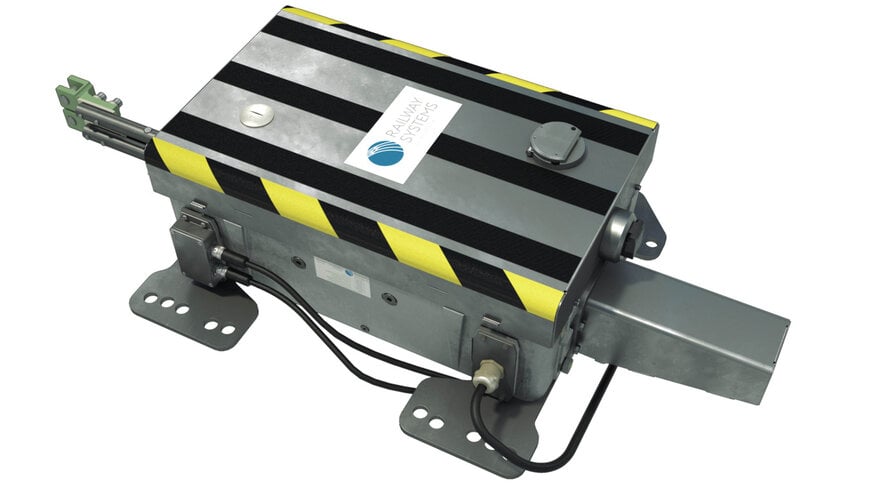
Turnouts represent critical single points of failure in railway infrastructure, where unexpected mechanical or hydraulic degradation directly halts traffic and drives costly emergency maintenance. With ECOSTAR 5.0, voestalpine Railway Systems provides an electro-hydraulic switch machine designed for mainline, high-speed, mixed-traffic, urban transit, and heavy-haul networks. The system resolves key operational challenges in turnout automation by pairing compact actuation hardware with continuous digital condition monitoring for predictive asset management.
Operational Demands on Railway Turnout Actuation
Point machines operate in severe outdoor environments subject to continuous vibration, wide temperature variations, and high dynamic track loads. Conventional turnout drives often require specialized mechanical footprints and vendor-dependent interlocking interfaces, making replacement and modernization projects complex and labor-intensive. In parallel, routine track possession windows are shrinking across heavily utilized corridors, forcing infrastructure managers to minimize installation times, eliminate field retrofitting bottlenecks, and transition away from reactive, interval-based inspections.
Electro-Hydraulic Actuation and Modular Integration
ECOSTAR 5.0 functions as a compact electro-hydraulic switch machine engineered to operate with external locking mechanisms, including SPHEROLOCK NG. Its hydraulic circuit generates required throw forces while dampening mechanical peak shocks transmitted from passing wheelsets. The lightweight, modular architecture allows track technicians to handle units during replacement without heavy crane infrastructure, streamlining field servicing and component swaps.
The system is engineered for universal compatibility with existing relay and electronic interlocking technologies. This interoperability allows rail authorities to implement modernized turnout drives across legacy infrastructure and constrained right-of-way layouts without replacing underlying signaling architectures.
Sensor Architecture for Condition-Based Maintenance
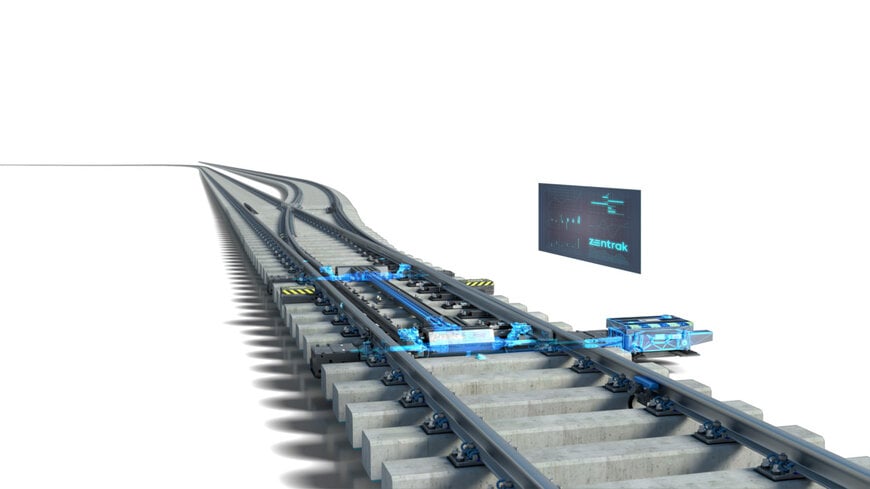
In the zentrak ECOSTAR 5.0 configuration, the drive integrates directly with zentrak SWITCH CONDITION MONITORING (zentrak SCM). Rather than relying on sporadic manual inspections, the system records operational parameters during every throw cycle and idle period:
- Hydraulic pressure values and fluid reservoir levels
- Actual switching force profiles throughout stroke progression
- Stroke transit duration and electrical current consumption profiles
- Detection gap verification at the switch rails
- Internal operating temperature
Diagnostic telemetry routes to the zentrak Diagnostic Platform, establishing baseline asset signatures and flagging early anomalies—such as hydraulic pressure loss, mechanical binding, or thermal drift—before failures disrupt scheduled timetables.
Deployment Across Rail Sectors
The electro-hydraulic drive accommodates diverse operating profiles, from high-speed passenger routes requiring tight detection tolerances to freight and heavy-haul corridors subjected to high axle loads. By replacing scheduled manual checks with continuous status evaluation, rail operators gain actionable data to schedule track possession windows according to physical wear, protecting rail network availability.
Additional Context
This section details technical specifications and competitive benchmarking not included in the original product announcement.
Point machine technology in rail infrastructure is governed by stringent safety and environmental standards, including CENELEC EN 50125-3 (environmental conditions for signaling equipment), EN 50126 (RAMS specifications), and EN 50129 (safety-related electronic systems up to SIL 4). In conventional railway deployments, electro-hydraulic drives compete directly with electromechanical switch machines (such as Alstom Echobike or Siemens BVO series), which utilize geared electric motors and clutch assemblies. While electromechanical systems avoid hydraulic fluids, electro-hydraulic architectures isolate mechanical shock loads and allow internal pressure relief under point obstruction. Furthermore, integrating embedded multi-parameter sensing directly inside the point machine enclosure reduces external trackside cabling compared to third-party bolt-on diagnostic clamps, aligning with standard industry initiatives toward digitized railway asset management.
Edited by Evgeny Churilov, Induportals Media - Adapted by AI.
www.voestalpine.com
Deployment Across Rail Sectors
The electro-hydraulic drive accommodates diverse operating profiles, from high-speed passenger routes requiring tight detection tolerances to freight and heavy-haul corridors subjected to high axle loads. By replacing scheduled manual checks with continuous status evaluation, rail operators gain actionable data to schedule track possession windows according to physical wear, protecting rail network availability.
Additional Context
This section details technical specifications and competitive benchmarking not included in the original product announcement.
Point machine technology in rail infrastructure is governed by stringent safety and environmental standards, including CENELEC EN 50125-3 (environmental conditions for signaling equipment), EN 50126 (RAMS specifications), and EN 50129 (safety-related electronic systems up to SIL 4). In conventional railway deployments, electro-hydraulic drives compete directly with electromechanical switch machines (such as Alstom Echobike or Siemens BVO series), which utilize geared electric motors and clutch assemblies. While electromechanical systems avoid hydraulic fluids, electro-hydraulic architectures isolate mechanical shock loads and allow internal pressure relief under point obstruction. Furthermore, integrating embedded multi-parameter sensing directly inside the point machine enclosure reduces external trackside cabling compared to third-party bolt-on diagnostic clamps, aligning with standard industry initiatives toward digitized railway asset management.
Edited by Evgeny Churilov, Induportals Media - Adapted by AI.
www.voestalpine.com
