
railway-international.com
28
'26
Written on Modified on
SYSTRA & Dassault Systèmes Collaborate on Next-Generation Rail Virtual Twins
New digital engineering initiative combines sector expertise, virtual models, real-world data and AI to improve infrastructure planning, simulation and lifecycle management.
www.systra.com
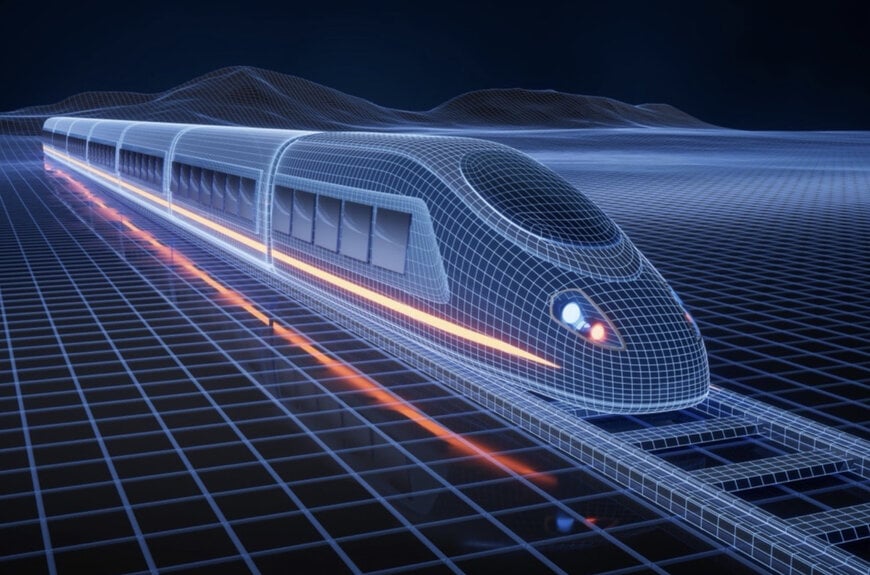
Engineering group SYSTRA and software developer Dassault Systèmes have formed a technology partnership to develop advanced virtual twin systems for rail transport and public infrastructure. The collaboration focuses on deploying industrial software environments to design, evaluate, and manage complex transit assets throughout their operational lifecycles.
Industrial Challenges in Rail Engineering
Transportation infrastructure engineering involves multi-disciplinary workflows, ranging from track design and signaling to environmental impact assessments. Traditionally, data sets and predictive models generated across these domains remain siloed, leading to fragmented project analyses. This fragmentation complicates decision-making during early design phases and increases the risk of integration errors during construction and asset maintenance. Resolving these challenges requires scalable digital infrastructure capable of consolidating disparate data sources into a unified operational model.
Technical Framework and Division of Responsibilities
The joint initiative combines SYSTRA's domain expertise in railway engineering with Dassault Systèmes' 3D modeling and industrial AI software architectures.
Under the cooperation, Dassault Systèmes supplies the modeling framework that connects multiple virtual representations of infrastructure assets to one another and their physical operating environments. The system incorporates real-world sensor feeds, physics-based simulations, and predictive AI models to run lifecycle evaluations in software prior to physical construction. SYSTRA applies its technical knowledge of transit networks to define operational logic, validation criteria, and engineering specifications, ensuring the digital twins accurately simulate structural loading, operational capacity, and multi-system interfaces.
Deployment and Infrastructure Integration
Announced at InnoTrans 2026, held from September 22 to September 25, 2026, in Berlin, Germany, the initiative targets the integration of digital twin workflows into live rail development programs. Deployment centers on connecting asset data into unified environments where public authorities, contractors, and design engineers share project parameters. The architecture accommodates existing enterprise databases and operational rail monitoring systems, ensuring secure data sovereignty and controlled governance over critical infrastructure assets.
Operational Applications and Long-Term Impact
The primary use case is the end-to-end management of rail networks, including high-speed lines, urban transit corridors, and intermodal transport hubs. During preliminary design, engineers simulate operational scenarios and assess environmental constraints to optimize route alignment and structural layouts.
By identifying system interdependencies early, the integrated platform reduces design revisions, improves constructability, and enhances operational safety. Through continuous simulation based on empirical field inputs, operators improve process stability and predictive maintenance scheduling over the lifecycle of the railway infrastructure.
Edited by Natania Lyngdoh, Induportals editor, assisted by AI.
www.systra.com
