
railway-international.com
01
'26
Written on Modified on
Expansion of urban transit infrastructure electric multiple unit fleet
Alstom has deployed the first of ten new Class 345 Aventra trains for the London Elizabeth line to address increasing passenger volumes.
www.alstom.com
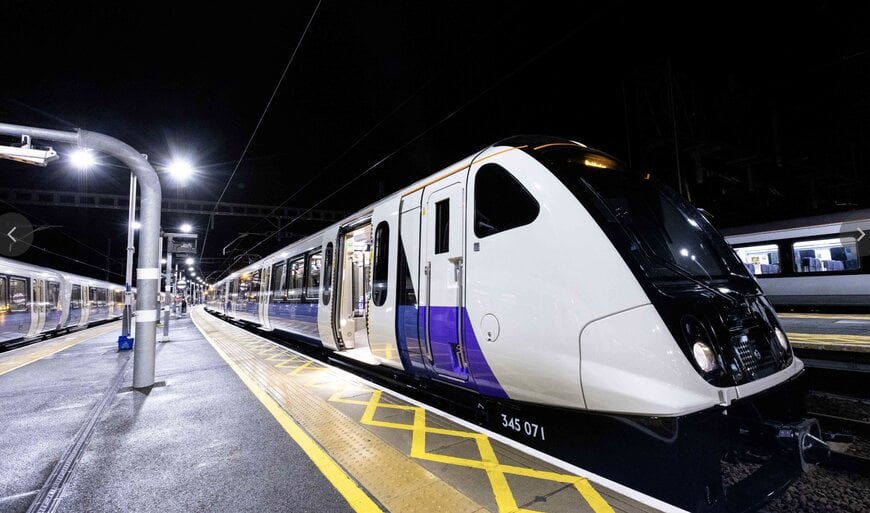
Credit: Transport for London
Alstom has introduced the first of ten supplementary nine-carriage Class 345 Aventra electric multiple units (EMUs) into active passenger service on the London railway network. The deployment targets high-capacity urban transit infrastructure applications and supports projected passenger demand surges, specifically relating to the forthcoming High Speed Two (HS2) railway interchange at Old Oak Common station.
Manufacturing Scale and Component Integration
The Class 345 Aventra trains are manufactured at the Derby Litchurch Lane Works facility in the UK. The production framework relies on a domestic supply chain comprising nearly 40 companies and over 1,000 employees. To meet structural and electrical specifications for high-frequency rail operation, the engineering of each nine-carriage train requires extensive material integration, including five miles of welding and 50 miles of system cabling. The mechanical assembly of each unit is secured by over 47,700 screws and 31,700 bolts, ensuring the structural rigidity necessary for heavy daily commuter use.
System Testing and Operational Deployment
Prior to integration into active service, the EMU underwent an extensive mainline testing phase. This validation process was conducted collaboratively between the manufacturer, Transport for London (TfL), and the operating entity GTS, ensuring the rolling stock met necessary safety and performance parameters for the central London railway environment. The initial unit, designated Class 345 Aventra No. 345071, received formal customer acceptance on 25 August and officially entered passenger operations on 28 August. The procurement of the additional ten units is supported by government funding to increase the line's overall payload capacity.
Additional Context
This section details technical specifications and competitive benchmarking not included in the original news release.
Within the UK high-density commuter rolling stock market, the Alstom Aventra platform is most directly benchmarked against the Siemens Desiro City platform (such as the Class 700 EMUs utilized on the Thameslink network). Both train architectures are engineered for high-frequency urban transit infrastructure, featuring lightweight aluminum body shells and regenerative braking systems to optimize energy efficiency during frequent stop-start operations.
A primary differentiator lies in interior configuration and operational focus. While the Siemens Class 700 utilizes a mixed transverse and longitudinal seating arrangement to balance medium-distance passenger comfort with standing capacity, the Class 345 is explicitly configured with predominantly longitudinal seating. This design maximizes standing space and payload density, allowing a nine-car consist to accommodate up to 1,500 passengers while facilitating rapid boarding and alighting to minimize station dwell times. Additionally, the Class 345 platform incorporates multi-system digital signaling integration, supporting both Communications-Based Train Control (CBTC) for automated central tunnel operations and the European Train Control System (ETCS) for mainline integration.
Edited by Aishwarya Mambet, Induportals Editor, with AI assistance.
www.alstom.com
Alstom has introduced the first of ten supplementary nine-carriage Class 345 Aventra electric multiple units (EMUs) into active passenger service on the London railway network. The deployment targets high-capacity urban transit infrastructure applications and supports projected passenger demand surges, specifically relating to the forthcoming High Speed Two (HS2) railway interchange at Old Oak Common station.
Manufacturing Scale and Component Integration
The Class 345 Aventra trains are manufactured at the Derby Litchurch Lane Works facility in the UK. The production framework relies on a domestic supply chain comprising nearly 40 companies and over 1,000 employees. To meet structural and electrical specifications for high-frequency rail operation, the engineering of each nine-carriage train requires extensive material integration, including five miles of welding and 50 miles of system cabling. The mechanical assembly of each unit is secured by over 47,700 screws and 31,700 bolts, ensuring the structural rigidity necessary for heavy daily commuter use.
System Testing and Operational Deployment
Prior to integration into active service, the EMU underwent an extensive mainline testing phase. This validation process was conducted collaboratively between the manufacturer, Transport for London (TfL), and the operating entity GTS, ensuring the rolling stock met necessary safety and performance parameters for the central London railway environment. The initial unit, designated Class 345 Aventra No. 345071, received formal customer acceptance on 25 August and officially entered passenger operations on 28 August. The procurement of the additional ten units is supported by government funding to increase the line's overall payload capacity.
Additional Context
This section details technical specifications and competitive benchmarking not included in the original news release.
Within the UK high-density commuter rolling stock market, the Alstom Aventra platform is most directly benchmarked against the Siemens Desiro City platform (such as the Class 700 EMUs utilized on the Thameslink network). Both train architectures are engineered for high-frequency urban transit infrastructure, featuring lightweight aluminum body shells and regenerative braking systems to optimize energy efficiency during frequent stop-start operations.
A primary differentiator lies in interior configuration and operational focus. While the Siemens Class 700 utilizes a mixed transverse and longitudinal seating arrangement to balance medium-distance passenger comfort with standing capacity, the Class 345 is explicitly configured with predominantly longitudinal seating. This design maximizes standing space and payload density, allowing a nine-car consist to accommodate up to 1,500 passengers while facilitating rapid boarding and alighting to minimize station dwell times. Additionally, the Class 345 platform incorporates multi-system digital signaling integration, supporting both Communications-Based Train Control (CBTC) for automated central tunnel operations and the European Train Control System (ETCS) for mainline integration.
Edited by Aishwarya Mambet, Induportals Editor, with AI assistance.
www.alstom.com
