
railway-international.com
11
'26
Written on Modified on
Siemens Mobility Unveils The Next Generation Vectron X Locomotive
The digitalized Vectron X platform features app-based functions, open interfaces, and real-time connectivity to optimize operating costs for freight and passenger transport.
www.siemens.com
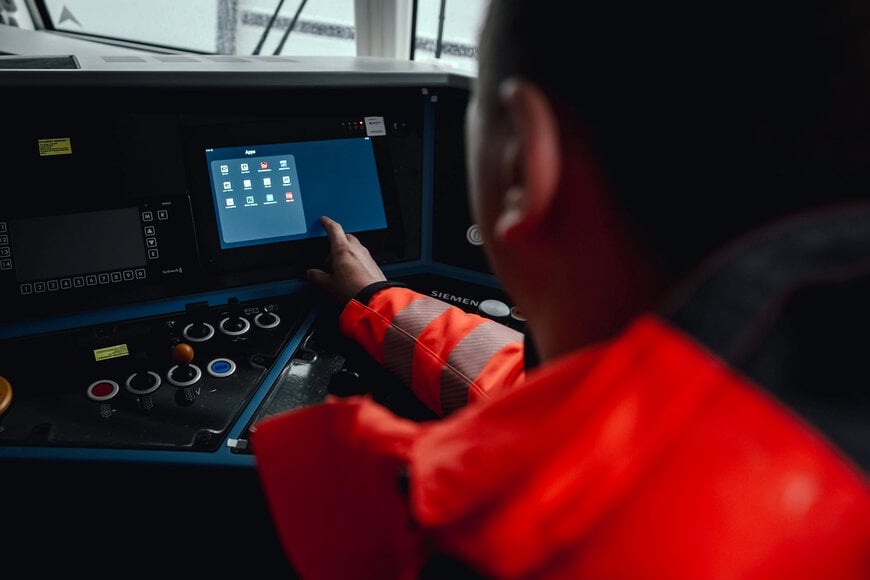
This technical initiative implements an open, software-based architecture within mainline locomotives to connect rolling stock, maintenance services, and digital infrastructure. The integration targets passenger and freight rail transport providers requiring scalable fleet management and interoperable diagnostic systems.
System Architecture and Interface Standards
The digital infrastructure is built upon the Siemens Xcelerator platform, which establishes standardized, open application programming interfaces (APIs) within the traction units. This architecture enables the integration of third-party operational software directly into the vehicle control systems.
Key technical components installed in the driver cab include:
- Central User Interface: An 11.6-inch hardware display unit that aggregates real-time telemetric data, route logistics, and diagnostic information.
- Application Layer: An embedded operating system that hosts edge applications for mission planning and operational coordination.
- Connectivity Module: A data transmission system providing near real-time telemetry to ground-based monitoring stations.
The software configuration utilizes a mirroring protocol to interface external mobile computing devices directly with the primary cab display, minimizing secondary hardware requirements for operators.
Maintenance Infrastructure and Predictive Data Flow
Operational data captured by the locomotive sensors is transmitted to a specialized servicing facility located in Munich-Allach. This technical loop links onboard diagnostics with depot management systems via prescriptive analytics software.
The integration of data flows allows for targeted maintenance workflows:
Maintenance Infrastructure and Predictive Data Flow
Operational data captured by the locomotive sensors is transmitted to a specialized servicing facility located in Munich-Allach. This technical loop links onboard diagnostics with depot management systems via prescriptive analytics software.
The integration of data flows allows for targeted maintenance workflows:
- Remote Initialization: Control software allows remote activation of the locomotive systems, enabling pre-service diagnostics and fluid pre-heating prior to driver arrival.
- Condition-Based Monitoring: Predictive algorithms process temperature, vibration, and electrical telemetry to detect component degradation before operational failure occurs.
- Automated Spare Parts Logistics: Diagnostic anomalies trigger automated parts allocation and repair scheduling within the workshop management database.
The updated workshop infrastructure in Munich-Allach utilizes fully paperless documentation and digital tracking assets to manage up to 80 comprehensive overhauls and structural repairs annually.
Operational Impact and Process Stability
By transitioning from fixed interval maintenance schedules to predictive, condition-based servicing, operators can reduce unplanned downtime and optimize fleet deployment. Standardized software interfaces ensure the mechanical platform remains compatible with evolving European train control systems and local digital signaling standards throughout its lifecycle.
Edited by Evgeny Churilov, Induportals Media - Adapted by AI.
www.siemens.com
Operational Impact and Process Stability
By transitioning from fixed interval maintenance schedules to predictive, condition-based servicing, operators can reduce unplanned downtime and optimize fleet deployment. Standardized software interfaces ensure the mechanical platform remains compatible with evolving European train control systems and local digital signaling standards throughout its lifecycle.
Edited by Evgeny Churilov, Induportals Media - Adapted by AI.
www.siemens.com
