
railway-international.com
20
'26
Written on Modified on
Railway energy management system PoC for tram networks
Mitsubishi Electric tests railway EMS with energy storage systems in Krakow to optimize regenerative braking energy use, reduce power consumption and stabilize catenary voltage.
www.mitsubishielectric.com
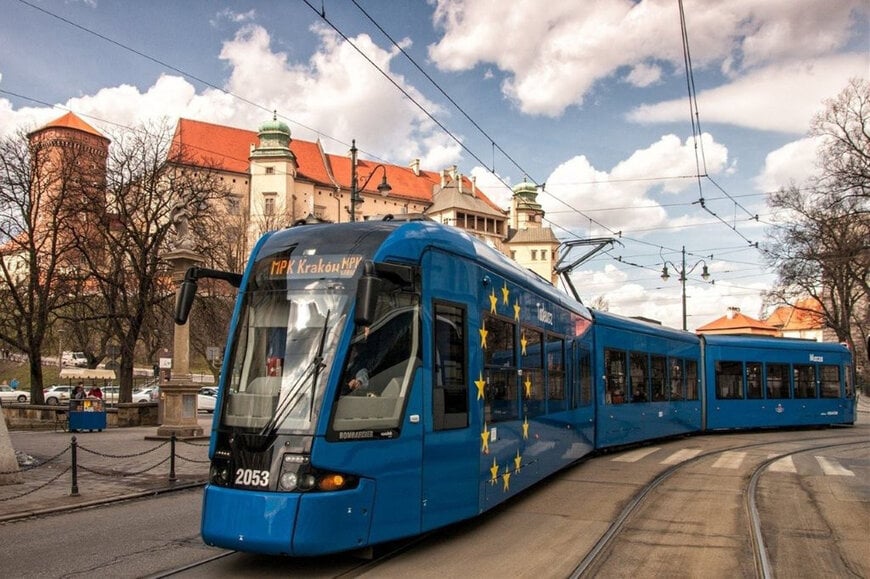
Mitsubishi Electric Corporation has announced the launch of a proof of concept (PoC) project in Krakow, Poland, scheduled to begin in April 2026. The initiative integrates the Serendie™ digital platform with advanced energy storage systems (ESSs) to manage surplus regenerative braking power within the city's tram infrastructure. The project is conducted in collaboration with Miejskie Przedsiębiorstwo Komunikacyjne S.A. w Krakowie (MPK), Zarząd Dróg Miasta Krakowa (ZDMK), and MEDCOM Sp. z o.o. to address rising energy costs and grid stability requirements.
Phase-Based Analytics and Network Mapping
The project is structured into three distinct technical stages designed to quantify energy efficiency gains:
- Network Analysis: The initial phase utilizes the railway energy management solution (EMS) to perform high-resolution analysis of power consumption patterns. This stage identifies the volume of surplus regenerated power and assesses current voltage stability within the overhead catenary systems.
- Verification and Visualization: Data collected is used to simulate electricity consumption reductions. Results are visualized through the mapping of surplus energy, identifying the high-potential zones for ESS installation based on operational benefit analysis.
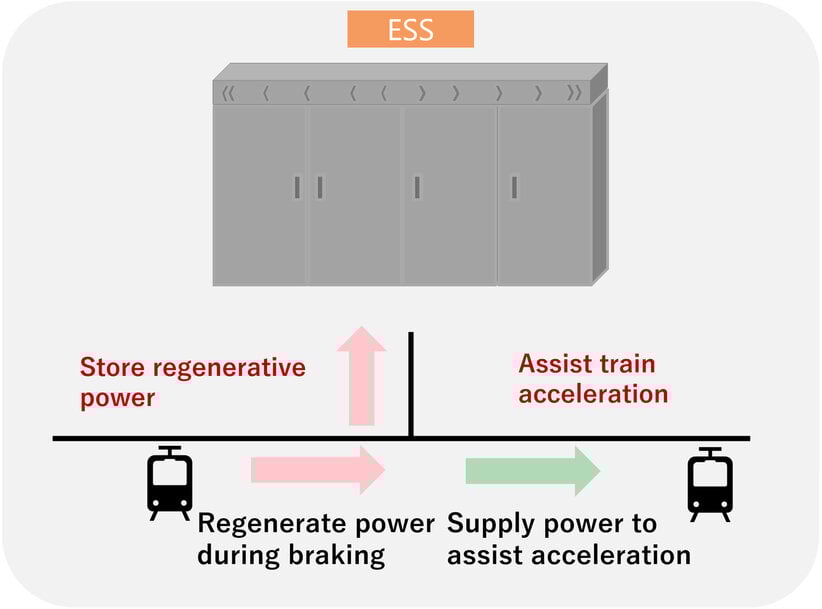
- Physical Deployment: The final phase involves the installation of ESS units at strategic locations along the tram lines to facilitate the redistribution of stored braking energy to other trams currently in operation.
High-Power Battery Technology and Voltage Stabilization
The hardware foundation of the project relies on the Mitsubishi High Power Battery (MHPB™) module. This energy storage technology is engineered to handle the rapid charge and discharge cycles characteristic of regenerative braking in rail applications. By capturing energy that would otherwise be dissipated as heat, the system stabilizes the voltage supplied via the overhead catenary. This stabilization prevents voltage sags during peak acceleration periods and mitigates spikes during braking, reducing the mechanical and thermal stress on both the railcars and the distribution infrastructure.
Strategic Objectives for the Automotive Data Ecosystem
The implementation of the railway EMS addresses critical bottlenecks in the digital supply chain of urban electricity. In the context of the Polish energy market, where rising demand and fuel volatility impact operational expenditure, the project aims to provide a scalable model for carbon neutrality. By optimizing electricity usage through real-time data integration, the solution supports railway operators in reducing peak power charges and improving the overall energy efficiency of the automotive data ecosystem.
Technical Benefits and Sustainability
The verified reductions in power consumption will provide measurable data points for future large-scale deployments. Beyond direct energy savings, the solution offers a mechanism for improving the long-term resilience of urban transit networks. The integration of intelligent management systems with physical storage ensures that the energy demand of the tram network is synchronized with the availability of regenerated power, fostering a more autonomous and stable energy circuit within the municipal infrastructure.
Edited by Romila DSilva, Induportals Editor, with AI assistance.
The hardware foundation of the project relies on the Mitsubishi High Power Battery (MHPB™) module. This energy storage technology is engineered to handle the rapid charge and discharge cycles characteristic of regenerative braking in rail applications. By capturing energy that would otherwise be dissipated as heat, the system stabilizes the voltage supplied via the overhead catenary. This stabilization prevents voltage sags during peak acceleration periods and mitigates spikes during braking, reducing the mechanical and thermal stress on both the railcars and the distribution infrastructure.
Strategic Objectives for the Automotive Data Ecosystem
The implementation of the railway EMS addresses critical bottlenecks in the digital supply chain of urban electricity. In the context of the Polish energy market, where rising demand and fuel volatility impact operational expenditure, the project aims to provide a scalable model for carbon neutrality. By optimizing electricity usage through real-time data integration, the solution supports railway operators in reducing peak power charges and improving the overall energy efficiency of the automotive data ecosystem.
Technical Benefits and Sustainability
The verified reductions in power consumption will provide measurable data points for future large-scale deployments. Beyond direct energy savings, the solution offers a mechanism for improving the long-term resilience of urban transit networks. The integration of intelligent management systems with physical storage ensures that the energy demand of the tram network is synchronized with the availability of regenerated power, fostering a more autonomous and stable energy circuit within the municipal infrastructure.
Edited by Romila DSilva, Induportals Editor, with AI assistance.
