
railway-international.com
09
'26
Written on Modified on
Rail Systems Upgrade Between Leeds and York Advances Transpennine Route Modernisation
Network Rail and VolkerRail lead TRU East Alliance delivering key infrastructure and signalling improvements on the Transpennine corridor between Leeds and York.
www.volkerrail.co.uk
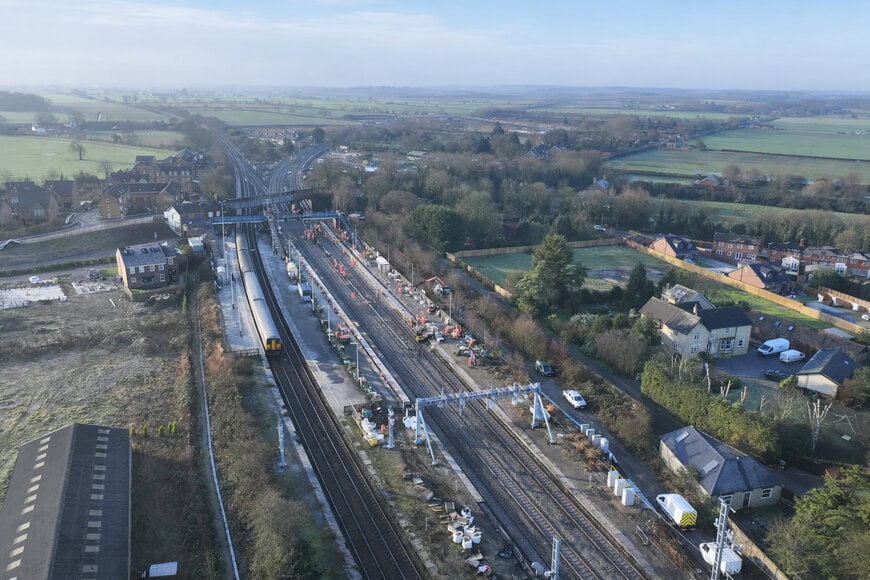
The Transpennine Route Upgrade (TRU) East Alliance, comprising Network Rail, VolkerRail, Murphy, Siemens Mobility and SYSTRA, has completed a 32-day engineering blockade implementing major rail infrastructure, signalling and power distribution enhancements on the railway between Leeds and York in northern England. The coordinated works are part of long-term rail modernisation to improve capacity, operational performance and readiness for electrified services.
Context of the Cooperation
The TRU East Alliance was formed to deliver the eastern segment of the broader UK government-backed Transpennine Route Upgrade, a comprehensive railway infrastructure modernisation programme. This section targets the approximately 30-mile corridor from Leeds to York, which currently operates with legacy track and control systems that constrain capacity, reliability and speed. Alliance partners contribute complementary expertise.
Network Rail provides project governance and operational requirements; VolkerRail and Murphy lead civil and systems installation; Siemens Mobility supplies signalling, power and communications equipment; and SYSTRA provides design integration and safety engineering.
Technical Solution and Responsibilities
The recent blockade focused on delivering multi-domain upgrades:
- Power Distribution & Lineside Systems: Installation of 17 km of lineside containment and bases for low-voltage distribution, signalling and telecom cables, creating a new infrastructure backbone for systems across the route.
- Signalling & Control: Commissioning of new signalling systems between Leeds and Church Fenton enabled by upgraded data interfaces and screen changes at York’s Regional Operations Centre, centralising train control.
- Track and Civil Works: Renewal and remodelling of approximately 3 km of track, installation of eleven switches and crossings, 70 new signals, earthworks and platform modifications to support future higher line speeds.
- Level Crossing Closures: Installation of Rose Lane and Barrowby Bridleway Bridges eliminated eight level crossings, reducing operational conflicts and improving safety.
The workload was sequenced into technically defined stages, starting with systems installation within the first 100 hours of the blockade and concluding with infrastructure reconfiguration. Clear division of responsibility ensured that civil, electrical and rail systems integration met applicable railway engineering standards.
Deployment and Implementation
The project was executed during an extended possession (blockade) of the line to allow uninterrupted engineering access. Preparatory works included earlier installation of key bridges to facilitate diversion route planning and safety enhancements. The installation of signalling and track components was coordinated across multiple teams with predefined commissioning procedures and system acceptance testing protocols. Communication interfaces into the Regional Operations Centre were upgraded to support operational control of the new signalling layout.
Applications and Operational Impact
The TRU East Alliance improvements support multiple operational priorities for passenger and freight rail:
Deployment and Implementation
The project was executed during an extended possession (blockade) of the line to allow uninterrupted engineering access. Preparatory works included earlier installation of key bridges to facilitate diversion route planning and safety enhancements. The installation of signalling and track components was coordinated across multiple teams with predefined commissioning procedures and system acceptance testing protocols. Communication interfaces into the Regional Operations Centre were upgraded to support operational control of the new signalling layout.
Applications and Operational Impact
The TRU East Alliance improvements support multiple operational priorities for passenger and freight rail:
- Enhanced signalling and renewed track infrastructure increase route capacity and resilience.
- Enabling future line-speed increases permits more efficient timetable planning and potential reductions in journey times.
- Safety enhancements from level crossing closures and upgraded power and telecoms infrastructure improve overall system reliability.
- These works prepare the corridor for phased electrification, reducing carbon emissions and supporting use of modern electric and bi-mode rolling stock.
Results and Expected Benefits
Quantifiable achievements from the blockade include the commissioning of 70 new signals and 3 km of renewed track. Upgraded systems establish a foundation for future electrification and line-speed increases, anticipated to enable more frequent, reliable services across northern England’s rail network. Technical integration of power distribution, signalling and civil remodelling is expected to reduce operational delays and maintenance overhead by replacing life-expired infrastructure with modular, standards-compliant systems.
Technical Leadership Commentary
Alliance partners highlighted the collaborative engineering effort required for the works, emphasising the scale of integrated rail systems delivery and the technical coordination necessary to transition to new signalling and power systems while meeting safety and operational standards.
www.volkerrail.com
Quantifiable achievements from the blockade include the commissioning of 70 new signals and 3 km of renewed track. Upgraded systems establish a foundation for future electrification and line-speed increases, anticipated to enable more frequent, reliable services across northern England’s rail network. Technical integration of power distribution, signalling and civil remodelling is expected to reduce operational delays and maintenance overhead by replacing life-expired infrastructure with modular, standards-compliant systems.
Technical Leadership Commentary
Alliance partners highlighted the collaborative engineering effort required for the works, emphasising the scale of integrated rail systems delivery and the technical coordination necessary to transition to new signalling and power systems while meeting safety and operational standards.
www.volkerrail.com
