
railway-international.com
07
'26
Written on Modified on
Automated suburban rail fleet expands open ATO railway system
Siemens Mobility and Stadler consortium to deliver fully automated trainsets to Danish State Railways, supporting large-scale automated train operation and long-term digital rail infrastructure modernisation.
stadlerrail.com
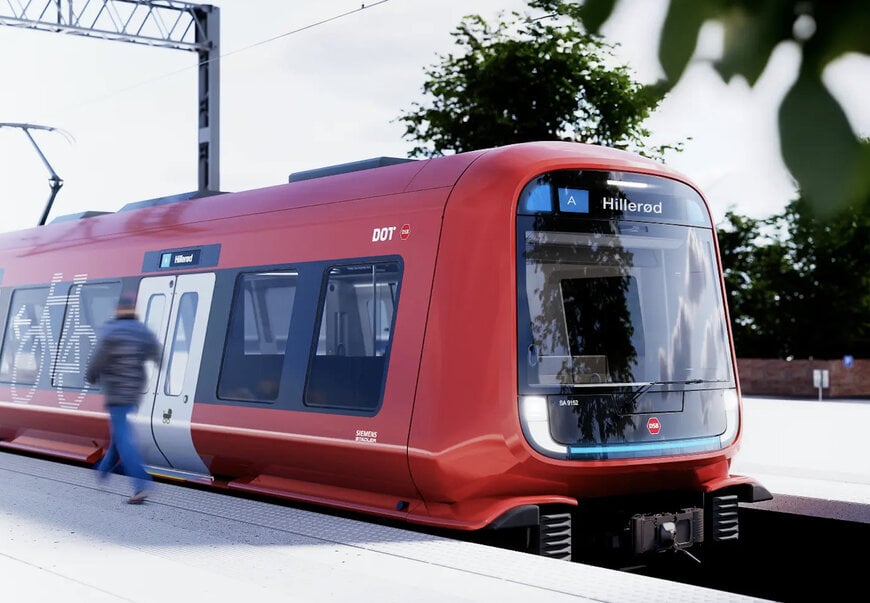
Danish State Railways (DSB) has awarded a framework contract to a consortium led by Siemens Mobility and Stadler for the delivery of 226 fully automated four-car trainsets, with an option for up to 100 additional units. The project establishes the largest open railway system using automated train operation (ATO), with a consortium contract value estimated at approximately three billion euros. The first vehicles are scheduled to enter service in 2032, with deliveries continuing through 2040.
Automated train operation for capacity and frequency expansion
The new fleet is designed for fully automated operation on Copenhagen’s S-Bane suburban network, enabling increased service frequency and operational flexibility. Peak service targets include intervals of up to seven and a half minutes per line and as little as one and a half minutes between trains in central sections. On certain routes, this represents up to a 35% increase in departures, potentially enabling around ten million additional passenger journeys annually.
The automation strategy supports DSB’s long-term modernization goals and responds to rising passenger demand. Approximately 111 million passengers used the S-Bane network in 2025, and projected growth has driven the need for scalable capacity and enhanced operational efficiency.
Consortium responsibilities and system architecture
As consortium leader, Siemens Mobility is responsible for electrical systems, including propulsion and braking technologies, onboard power supply, vehicle and train control systems, passenger information systems, and bogies. Stadler provides the carbody structures, couplings, interior fittings, seating, air-conditioning systems, and doors, as well as final assembly.
The project integrates intelligent mobility capabilities with advanced rail automation, forming part of a broader digital supply chain strategy within rail infrastructure. The deployment aligns with ongoing upgrades to signaling and automation systems that support fully automated operations planned for the network by 2033.
Passenger-focused design and operational functionality
Each trainset measures approximately 56 meters and includes 120 fixed seats, 36 folding seats, and capacity for roughly 300 standing passengers. Barrier-free design principles include level boarding through ground-level entrances with sliding steps, flexible multi-purpose spaces for bicycles and mobility devices, and optimized passenger flow through wide aisles and spacious entry areas.
Large front and side windows are intended to enhance visibility and openness, while features such as air conditioning, workspaces with tables, and improved passenger information systems aim to increase comfort and usability. The interior configuration offers greater flexibility compared with conventional suburban rolling stock, with adaptable layouts designed to support diverse commuter needs.
Engineering innovations and sustainability performance
The trainsets incorporate Siemens Mobility’s air-free braking system, which replaces conventional pneumatic components to reduce weight and operational energy consumption. According to the company, this design reduces associated CO₂ emissions by more than 50% compared with traditional systems. Combined with advanced propulsion technology, the solution is intended to improve precision, efficiency, and lifecycle operating costs.
Long-term digital maintenance and lifecycle support
The consortium will also provide a Technical Support & Spares Supply Agreement (TSSSA+) covering at least 30 years of service, with options for two additional five-year extensions. The framework includes Railigent X and other digital tools designed to support predictive maintenance, reliability monitoring, and cybersecurity management.
Maintenance responsibility will be shared, with Siemens overseeing system-level performance while DSB personnel perform operational maintenance tasks. The service architecture integrates digital platforms such as CORMAP and FRACAS/RAM reporting systems to optimize maintenance planning and improve fleet availability, supporting safe and punctual automated operations across Copenhagen’s suburban rail network.
www.stadlerrail.com
