
railway-international.com
02
'26
Written on Modified on
Battery Rail Cutting for Constrained Environments
Robel introduces battery-powered rail cutting designed to reduce possession times and support flexible maintenance in tunnels and dense urban rail networks.
www.robel.com
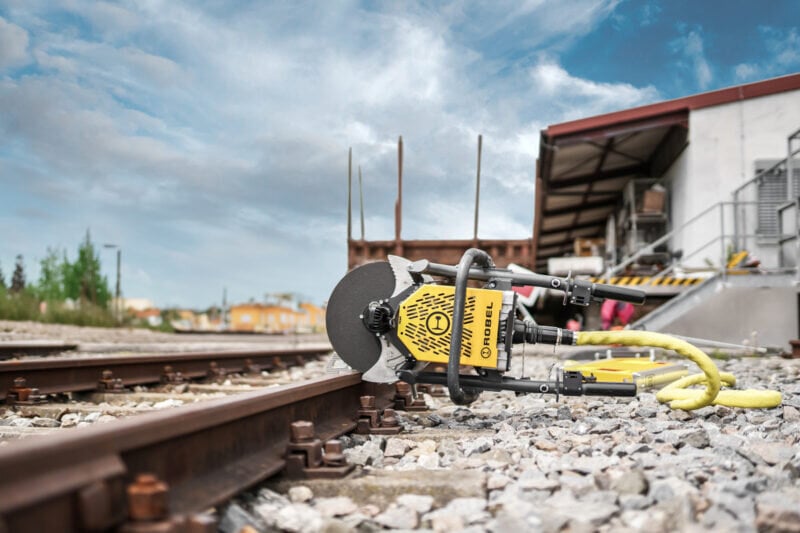
The ROCUT E3 is a battery-powered rail cutting system developed for maintenance environments where speed, precision, and operational flexibility are critical, particularly in tunnels and space-constrained urban corridors.
Operational demands in modern rail maintenance
Rail maintenance activities increasingly take place under restrictive conditions, including limited access, short possession windows, and strict constraints on noise and emissions. In tunnels and urban areas, the use of fuel-powered or cable-dependent equipment can complicate logistics and extend setup times. Battery-powered tools address these challenges by simplifying deployment and enabling rapid intervention without reliance on external power sources.
The ROCUT E3 is positioned to support these requirements by combining high cutting performance with cordless operation, enabling faster workflows during time-critical maintenance activities.
Cutting performance and productivity
The rail cutter is specified to complete a cut on a 60E1 rail in approximately 60 seconds. This cutting speed directly supports reduced track possession times, allowing maintenance teams to complete interventions more quickly and minimise disruption to traffic.
With compatibility for 350 mm and 400 mm cutting discs, the system is designed to deliver consistent performance across a range of rail profiles. A single battery charge supports approximately 20 cuts, allowing multiple operations to be completed before battery replacement or recharging is required.
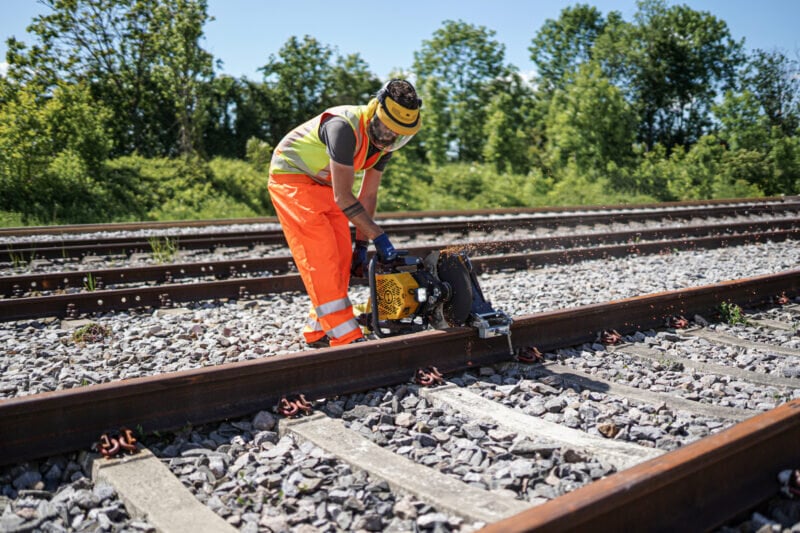
For fast and efficient cutting of maximum strength rails. © ROBEL
Ergonomics and operator safety
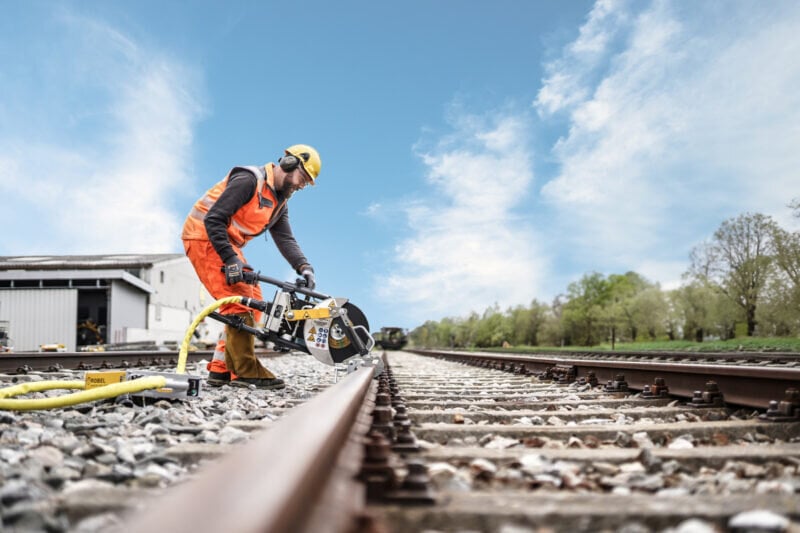
The ROCUT E3 incorporates an articulated support arm that carries a significant portion of the machine’s weight during operation. This design reduces physical strain on the operator, which is particularly relevant during extended cutting tasks or when working in confined spaces where body positioning is restricted.
Rails can be cut from both sides, increasing flexibility when access is limited by surrounding infrastructure or rolling stock. This bidirectional cutting capability allows operators to adapt to site-specific constraints without repositioning heavy equipment.
MultiDrive and application flexibility
The system incorporates MultiDrive Technology, enabling multiple drive configurations within a single machine. This allows operators to adjust the cutting setup to suit different operational requirements without changing equipment, supporting efficient task execution across varied work sites.
Beyond standard flat-bottom rails, the cutter is suitable for grooved rails and crane rails. This broad compatibility extends its use beyond conventional mainline maintenance to include tramway systems, depots, and industrial rail installations.
Power, mobility, and environment
With a rated output of 6.6 kW, the ROCUT E3 delivers cutting performance comparable to higher-powered cabled or fuel-driven systems while maintaining the benefits of battery operation. The absence of exhaust emissions and reduced noise output make it suitable for enclosed environments such as tunnels, as well as urban areas with environmental and occupational constraints.
By combining high power density with cordless mobility, the system supports maintenance strategies that prioritise rapid deployment, operator safety, and minimal environmental impact.
Implications for rail infrastructure maintenance
The ROCUT E3 illustrates how battery-powered tooling is reshaping rail maintenance practices. By reducing setup complexity, shortening cutting times, and improving ergonomics, such systems contribute to higher productivity and safer working conditions while aligning with tighter operational and environmental requirements across modern rail networks.
