
railway-international.com
29
'26
Written on Modified on
Railway pressure transmitter for onboard pneumatic and hydraulic systems
Trafag introduces the NAR 8258 pressure transmitter for railway vehicles to provide accurate pressure monitoring across braking, HVAC, and fluid systems.
www.trafag.com
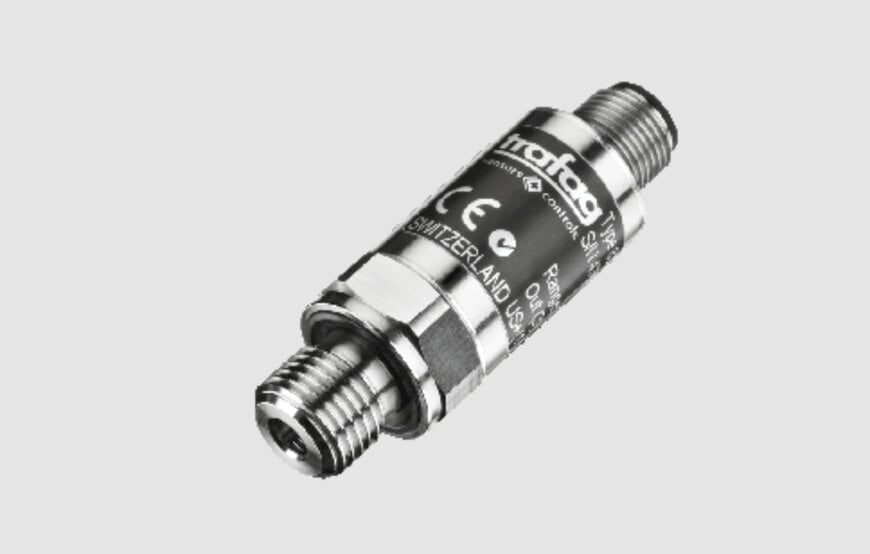
Trafag has released the NAR 8258 Railroad Pressure Transmitter, designed for pressure measurement in rail vehicles, with a focus on measurement stability, environmental robustness, and compliance with railway standards for onboard and underfloor applications.
Technical positioning and application scope
The NAR 8258 is engineered for pressure monitoring in railway subsystems such as braking circuits, HVAC systems, and hydraulic or pneumatic control loops. The transmitter targets both new rolling stock platforms and retrofit projects, supporting fleet-level standardization in pressure sensing architectures within rail operations and maintenance workflows.
Measurement ranges from 0–6 bar to 0–700 bar (0–100 to 10,000 psi) allow coverage of multiple pressure domains with a single device platform, simplifying component harmonization across rolling stock and contributing to streamlined asset management in the digital supply chain of rail operators.
Sensor architecture and measurement performance
The device uses a thin-film-on-steel sensing element with a specified accuracy of ±0.3% full scale at 25 °C. Long-term stability is specified at 0.1% FS per year, which reduces drift-related recalibration requirements over the service life of the vehicle and lowers lifecycle maintenance costs.
A typical response time of 1 ms (10–90% of nominal pressure) supports dynamic control and protection functions in safety-relevant pressure systems.
Mechanical and environmental robustness
The transmitter is designed for mechanical loads typical of railway environments, with vibration resistance up to 25 g and shock resistance up to 100 g. Operating temperature ranges from –40 °C to +85 °C support outdoor and underfloor installations across climatic regions.
Triple overpressure protection up to three times nominal pressure mitigates the impact of transient pressure spikes. Protection classes up to IP65, IP67, and IP68 provide sealing against dust and water ingress for long-term deployment in exposed positions.
Media-wetted components are manufactured from stainless steel 1.4542 (AISI 630), while the housing uses stainless steel 1.4301 (AISI 304), providing corrosion resistance and mechanical durability. Sealing options in FKM, EPDM, and NBR allow material selection based on medium compatibility and temperature profiles.
Electrical interfaces and signal integration
The NAR 8258 provides a 4–20 mA analog output for long-distance, noise-immune signal transmission. Optional one or two PNP switching outputs enable direct limit monitoring, combining pressure transmitter and pressure switch functionality in a single device.
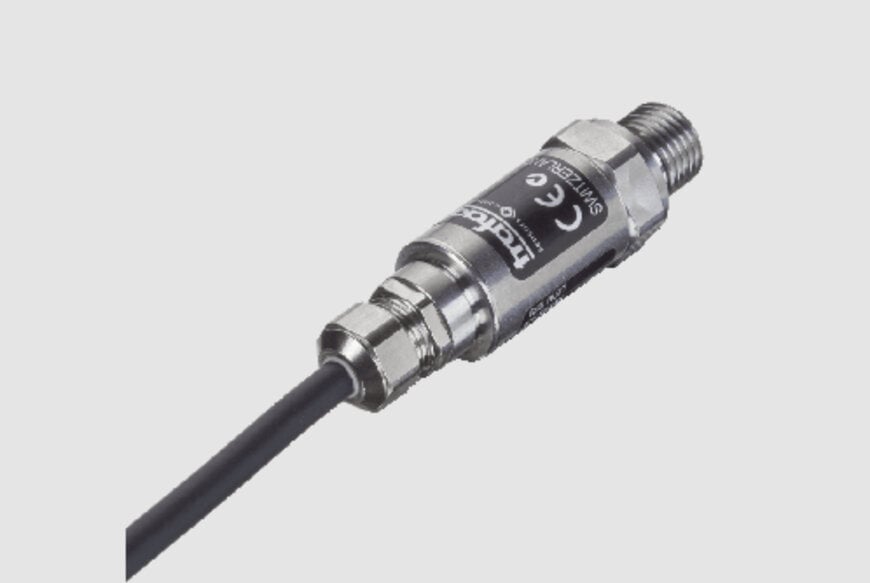
Electrical connection options include industrial standard plugs, M12x1 4- or 5-pole connectors, and molded Radox cables. Radox Tenuis cables rated to IP67/IP68 support sealed field wiring in harsh underfloor environments. Switching outputs support total switching currents up to 400 mA, enabling use in frequently cycling applications without additional relay components.
Standards compliance and interoperability
The transmitter meets EN 45545-2 fire protection requirements, EN 61373 for shock and vibration, EN 50121-3-2 for electromagnetic compatibility, and EN 50155 for electronic equipment in rolling stock. These certifications support deployment in passenger and freight vehicles while reducing electromagnetic interference risks with onboard control electronics, including elements of the automotive data ecosystem in rail-adjacent mobility platforms.
Installation flexibility and system integration
A wide range of pressure connections is available to support regional and application-specific standards. Optional integrated pressure peak damping elements reduce the impact of pulsations in dynamic pneumatic and hydraulic circuits, improving measurement stability in high-frequency pressure environments.
The combination of modular mechanical interfaces and standardized electrical outputs supports integration into distributed monitoring architectures and condition-based maintenance systems used in modern rolling stock fleets.
Operational implications for railway operators
By combining measurement accuracy, environmental resilience, and railway-specific certifications in a compact form factor, the NAR 8258 provides a standardized platform for pressure sensing across multiple onboard systems. The device is positioned to support predictive maintenance strategies, reduce recalibration intervals, and improve system availability in safety-critical railway applications.
www.trafag.com
