
railway-international.com
13
'26
Written on Modified on
Stadler refurbishes GTW trains for Hungarian rail operations
Modernised second-hand multiple units will add 14,000 passenger seats, with ETCS/Mirel protection and 25 kV conversion supporting MAV’s near-term fleet capacity.
stadlerrail.com
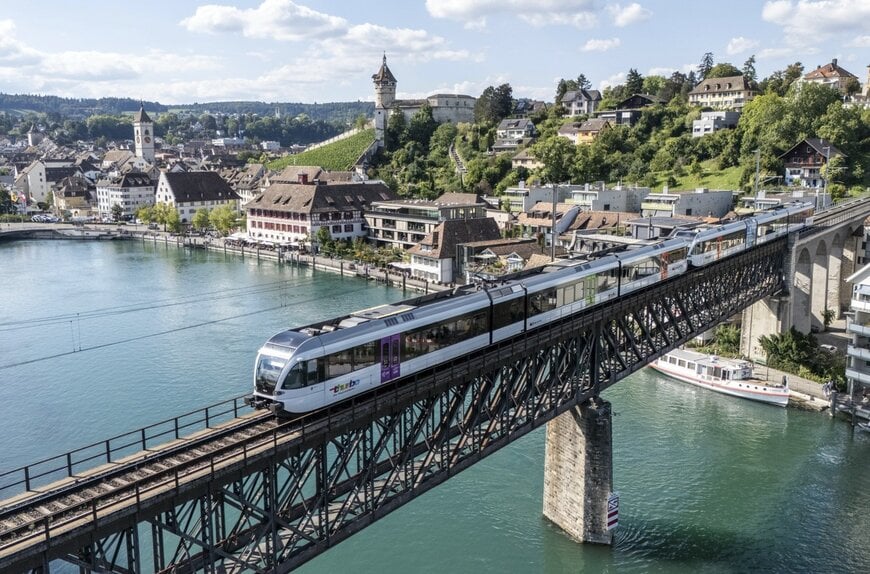
Hungary is looking to expand regional rail capacity faster than typical new-train procurement cycles allow, while also replacing ageing rolling stock. Stadler has now agreed to acquire and modernise 93 GTW articulated railcars from Swiss operator Thurbo and resell them to Hungarian State Railways (MÁV), adding around 14,000 seats to the passenger fleet after refurbishment and re-approval for Hungarian operation.
Why MÁV is turning to second-hand multiple units
MÁV expects significant fleet development needs in the coming years and has indicated interest not only in new rolling stock but also in purchasing used trains. Stadler assessed conversion and re-approval requirements for Hungary and selected the Thurbo GTW fleet as a suitable candidate. After negotiations, Stadler and MÁV signed a sale agreement covering the upgrade and transfer of the 93 vehicles.
From an operational planning perspective, refurbished vehicles can be deployed more quickly than new stock, especially where capacity constraints are immediate and the limiting factors are procurement lead times and certification.
Delivery window: annual batches from 2027 to 2034
Stadler will take over the Thurbo vehicles in annual batches between 2027 and 2034. The modernised trains are intended to replace older MÁV vehicles and raise the comfort level to match what passengers in Hungary have already experienced with the existing Stadler FLIRT fleet operating in the country.
Thurbo’s overall GTW fleet totals 110 vehicles. The operator decided in 2021 to replace the GTW fleet with 107 FLIRT Evo regional trains from Stadler, and plans to phase out the GTW units gradually through 2034, aligning with new deliveries.
Technical retrofit: traction conversion and signalling integration
The refurbishment scope includes equipment upgrades and network compatibility adaptations required for Hungarian operation.
Key modifications include:
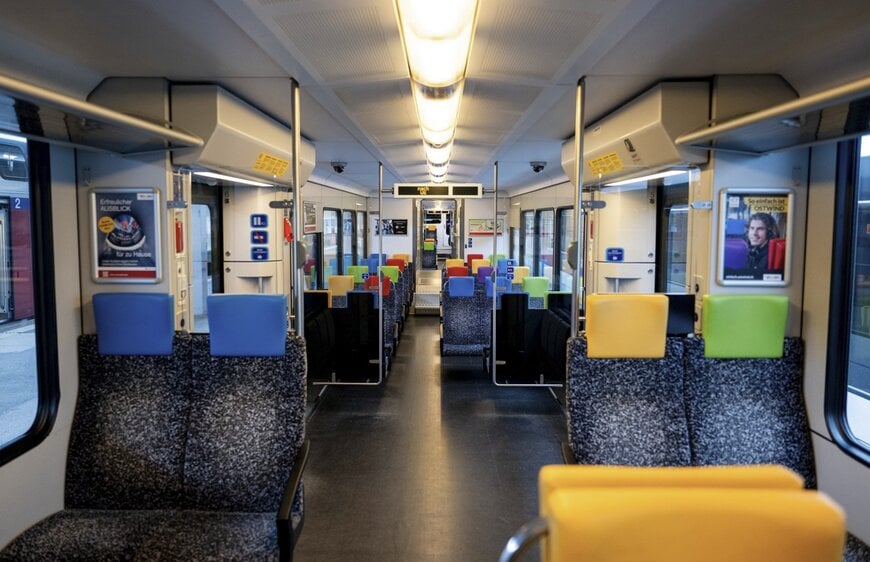
- Conversion of the propulsion system to 25 kV, matching the Hungarian electrification system
- Installation of a new Passenger Information System
- Video surveillance integration
- Sliding steps adapted to Hungarian platform heights
- A vehicle onboard computer for drivers
- A combined Mirel + ETCS Baseline 4 (BL4) train protection system
In addition, the trains will be re-foiled in MÁV corporate identity colours and receive new seat covers.
The integration of ETCS BL4 is particularly relevant for interoperability and signalling compliance across European rail networks, while Mirel remains widely used in parts of Central and Eastern Europe. This combined approach is intended to align onboard safety systems with Hungary’s operational and infrastructure requirements.
Industrial setup: prototypes in Switzerland, series work in Hungary
Stadler states that modernisation work requires 12 weeks per train. Prototype conversions are being carried out in Switzerland, while Stadler is establishing a service facility in Hungary to support subsequent series refurbishment.
This structure mirrors broader rail-industry practice: prototype builds validate the engineering change package and approval pathway, after which serial modifications shift closer to the deployment market to reduce logistics overhead and enable local service readiness.
Refurbishment as a rolling stock lifecycle strategy
Beyond the MÁV fleet expansion, Stadler frames the programme as a lifecycle extension approach for relatively modern multiple units, positioning refurbishment as a technically and economically competitive alternative to purchasing new trains.
The project also represents a shift in supplier role: rather than only delivering new rolling stock, Stadler is combining purchase, refurbishment, certification support and resale into a structured secondary-market offering. Given that the GTW trains were among the larger-volume series Stadler delivered over the past two decades, the programme could serve as a template for similar fleet transfer-and-modernisation projects in other markets.
www.stadlerrail.com
The integration of ETCS BL4 is particularly relevant for interoperability and signalling compliance across European rail networks, while Mirel remains widely used in parts of Central and Eastern Europe. This combined approach is intended to align onboard safety systems with Hungary’s operational and infrastructure requirements.
Industrial setup: prototypes in Switzerland, series work in Hungary
Stadler states that modernisation work requires 12 weeks per train. Prototype conversions are being carried out in Switzerland, while Stadler is establishing a service facility in Hungary to support subsequent series refurbishment.
This structure mirrors broader rail-industry practice: prototype builds validate the engineering change package and approval pathway, after which serial modifications shift closer to the deployment market to reduce logistics overhead and enable local service readiness.
Refurbishment as a rolling stock lifecycle strategy
Beyond the MÁV fleet expansion, Stadler frames the programme as a lifecycle extension approach for relatively modern multiple units, positioning refurbishment as a technically and economically competitive alternative to purchasing new trains.
The project also represents a shift in supplier role: rather than only delivering new rolling stock, Stadler is combining purchase, refurbishment, certification support and resale into a structured secondary-market offering. Given that the GTW trains were among the larger-volume series Stadler delivered over the past two decades, the programme could serve as a template for similar fleet transfer-and-modernisation projects in other markets.
www.stadlerrail.com
