
railway-international.com
12
'26
Written on Modified on
Rail Ethernet switches gain IEC 62443-4-2 SL2 cybersecurity certification
Westermo certifies Viper-3000 variants and WeOS 5 to support secure rail networks and mission-critical industrial connectivity under IEC 62443 requirements.
www.westermo.com
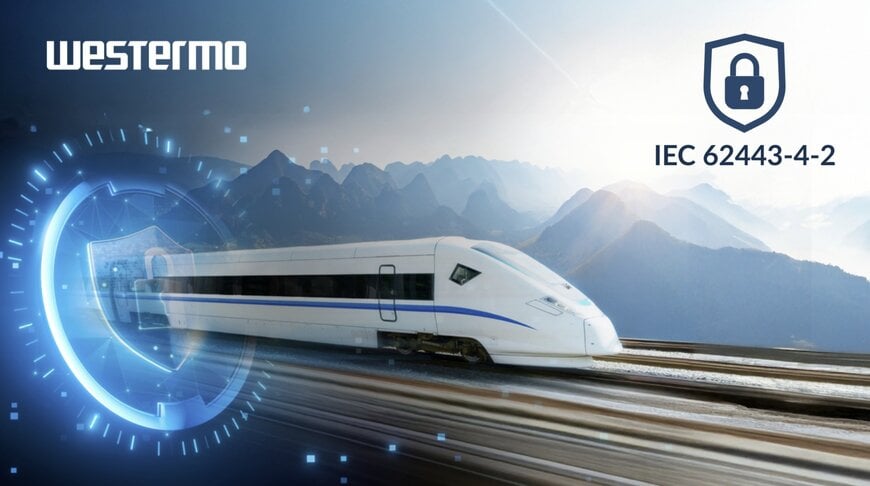
Westermo has achieved IEC 62443-4-2 Security Level 2 (SL2) certification for its Viper-3000 series Ethernet switches and the WeOS 5 operating system, confirming compliance with internationally defined cybersecurity requirements for industrial network components used in rail and other mission-critical environments.
Announced on January 12, 2026, the certification applies to a portfolio of more than 40 Viper-3000 variants designed for train networks and rolling stock applications, where operational continuity and controlled access to communications infrastructure are key design requirements.
What IEC 62443-4-2 SL2 validates at the component level
IEC 62443-4-2 is a globally recognized cybersecurity standard that defines technical requirements for industrial automation and control system (IACS) components—covering embedded devices, network components, host systems, and software applications. The standard addresses mechanisms such as authentication, access control, data integrity, and protection against unauthorized access.
Security Level 2 (SL2) is aimed at reducing risk from intentional violations using “low to moderate” attack sophistication, aligning with environments where system connectivity is necessary but exposure to cyber threats is increasingly expected—such as connected rail infrastructure, industrial automation networks, and critical utilities.
Security functions highlighted in the Viper-3000 certification scope
For rail and industrial deployments, component security is typically evaluated through concrete implementation mechanisms rather than high-level claims. Westermo states that the certified Viper-3000 series with WeOS 5 includes features such as:
- Secure Boot, to verify software authenticity during startup and prevent execution of unauthorized firmware;
- Encrypted Key Handling, to reduce the risk of credential extraction or misuse;
- Integrity-Validated Configuration, to help detect unauthorized changes to device settings.
Westermo links the certification outcome to structured secure development practices aligned with IEC 62443-4-1, which focuses on the processes used to design and maintain secure products throughout their lifecycle.
How certified components reduce effort in IEC 62443 system approval
For equipment manufacturers and integrators building secure rail networks or industrial control environments, pre-certified components can reduce the workload when pursuing system certification. Westermo positions IEC 62443-4-2 certification as a practical accelerator for IEC 62443-3-3, which defines cybersecurity requirements at the system level.
In implementation terms, using networking devices that already meet defined component security requirements can reduce the need for repeated evidence gathering, gap analysis, and verification during system-level compliance assessments—particularly for architectures that include multiple onboard network segments and remote management interfaces.
Where IEC 62443-based industrial security is being applied
IEC 62443 is a horizontal cybersecurity standard referenced across multiple sectors with similar operational constraints—high availability requirements, long equipment lifetimes, and mixed legacy-modern infrastructure. Westermo highlights relevance for railway applications (including onboard trains and rolling stock) as well as industrial settings, and notes acceptance across domains such as energy and utilities and industrial automation.
For operators, the certification is also positioned as a transparency measure, supported by the provision of compliance documentation and official certificates—materials typically required during audits, procurement evaluations, and cybersecurity assurance processes in a digital supply chain.
www.westermo.com
How certified components reduce effort in IEC 62443 system approval
For equipment manufacturers and integrators building secure rail networks or industrial control environments, pre-certified components can reduce the workload when pursuing system certification. Westermo positions IEC 62443-4-2 certification as a practical accelerator for IEC 62443-3-3, which defines cybersecurity requirements at the system level.
In implementation terms, using networking devices that already meet defined component security requirements can reduce the need for repeated evidence gathering, gap analysis, and verification during system-level compliance assessments—particularly for architectures that include multiple onboard network segments and remote management interfaces.
Where IEC 62443-based industrial security is being applied
IEC 62443 is a horizontal cybersecurity standard referenced across multiple sectors with similar operational constraints—high availability requirements, long equipment lifetimes, and mixed legacy-modern infrastructure. Westermo highlights relevance for railway applications (including onboard trains and rolling stock) as well as industrial settings, and notes acceptance across domains such as energy and utilities and industrial automation.
For operators, the certification is also positioned as a transparency measure, supported by the provision of compliance documentation and official certificates—materials typically required during audits, procurement evaluations, and cybersecurity assurance processes in a digital supply chain.
www.westermo.com
