
railway-international.com
11
'25
Written on Modified on
Latvia Selects Next-Generation Battery Trains for Efficient Regional Mobility
Škoda Group supplies a new low-emission BEMU fleet to support Latvia’s rail modernisation and improve regional transport service quality.
www.skoda.cz
Why Latvia Chose a New Battery Train Platform
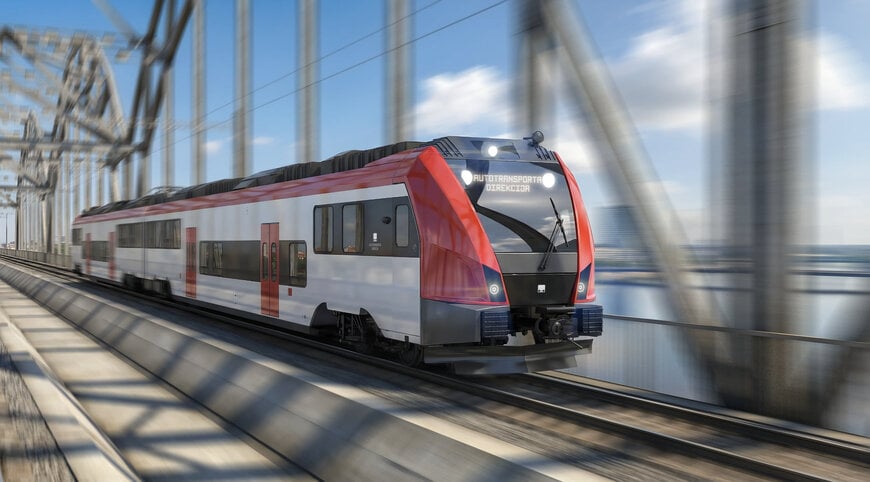
Latvia has been expanding its zero-emission regional rail services, and the decision to procure Škoda Group’s next-generation battery electric multiple units (BEMUs) is part of a wider strategy to increase efficiency, reduce diesel dependence, and modernise public transport. Autotransporta direkcija awarded Škoda Group a contract for up to sixteen BEMUs, including an initial nine units and an option for seven more. The project, financed through the state budget and EU Cohesion Funds, aims to expand the country’s capability to operate clean regional services without relying on continuous electrification.
The selection follows recent deployments of similar Škoda battery trains in the Czech Republic and a contract for Slovakia, indicating that Latvia evaluated practical results and operational data when choosing a platform suited for its network and climate requirements.
A Platform Adapted for the Baltic Rail Environment
The BEMUs for Latvia are based on a single-deck regional platform used across the Baltic region, now adapted for a 1,520 mm gauge and low-floor operation. This makes the fleet compatible with current Latvian infrastructure while providing more accessible boarding. Designed as two-car units, each train supports dual-voltage operation at 3 kV DC and 25 kV AC, enabling operation on both electrified and non-electrified lines. Maximum speeds reach 160 km/h under the overhead line and 120 km/h in battery mode, ensuring competitive travel times on regional routes.
Passenger comfort was prioritised with up to 188 seats, a separate first-class section, modern interior equipment, and significantly reduced noise and vibration levels. The units also increase bicycle capacity compared with legacy diesel fleets, offering eight spaces integrated into the low-floor area. The 600 mm entry height improves accessibility for all passenger groups and complies with the latest European requirements.
Technical Characteristics That Support Latvia’s Operational Needs
The trains include a battery system designed to meet regional route profiles where partial electrification is common. Their configuration enables efficient transitions between catenary and battery operation, lowering fuel costs and enabling continuous travel without transfers. By choosing a fleet capable of operating long distances on battery power, Latvia can expand its network without immediate large-scale infrastructure investments.
The BEMUs’ physical dimensions—56.5 metres in length, 3.43 metres in width, and 4.56 metres in height—match the requirements of the Baltic rail environment. A minimum curve radius of 150 metres ensures compatibility with regional lines. The combination of low-floor accessibility, energy-efficient traction equipment, and modern onboard systems places the platform in a competitive position compared with other regional BEMU offers in Europe.
Strengthening the Baltic Fleet and Regional Integration
Latvia’s order builds on existing cooperation with Škoda Group, where 32 electric multiple units are already in service with high availability and extensive operational mileage. The new battery fleet strengthens the manufacturer’s presence across the Baltics, complementing the EMUs supplied to Estonia and trolleybuses delivered to Tallinn and Vilnius. This continuity supports fleet standardisation and simplifies future maintenance and operational planning for the region.
Proven Outcomes from Real-World Battery Operations
Comparable Škoda battery trains introduced in the Czech Republic have accumulated more than 600,000 kilometres within the first ten months of operation, with nearly half of that distance completed in battery mode. These deployments demonstrated measurable benefits, including reduced diesel consumption, lower CO₂ emissions, and growth in passenger numbers due to improved service and travel times. Latvia’s adoption of the updated BEMU platform draws from this operational evidence and aims to replicate these results in Baltic conditions.
A Strategic Step in Latvia’s Rail Modernisation
Latvia’s decision to introduce the Škoda Group’s new BEMU platform represents a targeted investment in cleaner regional mobility. By selecting a fleet that supports dual-voltage operation, extended battery range, and high passenger comfort, the country is accelerating a transition toward more reliable and energy-efficient rail transport. The first units are expected to be deployed in the first half of 2029, marking a significant milestone in Latvia’s long-term effort to strengthen regional rail connectivity.
www.skoda.com
