
railway-international.com
10
'25
Written on Modified on
Preventing Accidents With IoT Telematics In Locomotives
Clayton Equipment uses IoT-enabled telematics to deliver real-time visibility, predictive maintenance and significantly enhanced safety on modern locomotives.
claytonequipment.co.uk
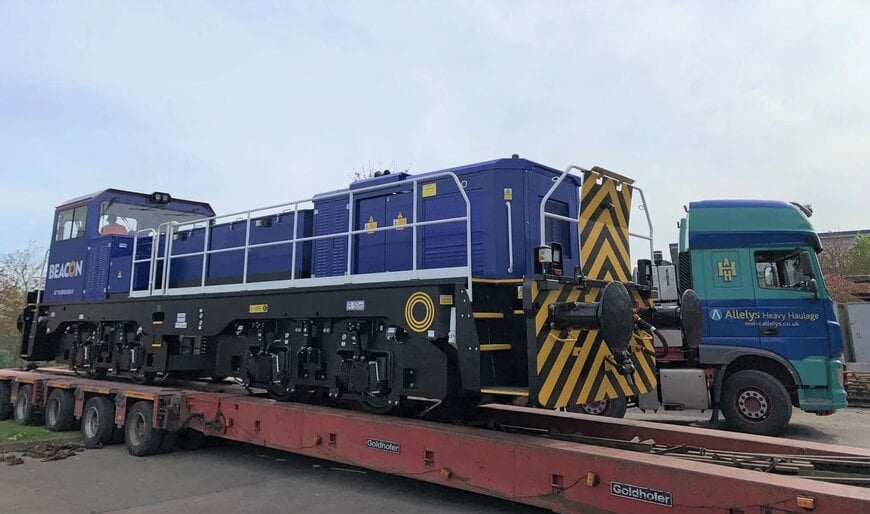
The twin pillars of safety and operational efficiency have long underpinned the rail operations industry. Yet historically, maintenance has largely been a reactive process—driven by scheduled inspections or urgent responses to equipment failure. This approach often led to unplanned downtime, higher operational costs, and increased safety risks.
Today, that outdated model is rapidly being replaced. Thanks to the integration of advanced Internet of Things (IoT) technologies, the industry is shifting toward proactive, data-led maintenance. IoT telematics is no longer a luxury; it is a necessity—providing real-time asset visibility, reducing operational risk, and enabling predictive maintenance that safeguards both capital assets and public safety.
Real-Time Visibility Through IoT Telematics
Digital transformation starts at the locomotive level. Modern locomotives equipped with high-resolution IoT sensors can continuously collect and transmit operational data, creating a live picture of asset performance.
Systems like Clayton Equipment’s LocoWatch act as the locomotive’s central nervous system—capturing hundreds of data points in real time. This goes far beyond basic GPS positioning. Operators gain full visibility into metrics such as:
- Speed profiles
- Fuel levels
- Battery state-of-charge
- Voltage levels
- Temperature and thermal behavior
- Mechanical strain, vibration patterns, and much more
For heavy-duty assets such as train shunters, this level of insight is transformative. Sudden voltage drops, overheating, or abnormal load patterns—problems that may go unnoticed during routine inspections—can now be flagged instantly. This constant data flow forms the foundation of predictive maintenance, ensuring locomotives remain within safe operating parameters.
Moving Beyond Scheduled Maintenance
Real-time monitoring is only the beginning. The true value of modern IoT telematics emerges when the data is analysed through AI and machine learning.
With predictive analytics, operators can detect early indicators of component degradation weeks or even months before a potential failure. Examples include:
Moving Beyond Scheduled Maintenance
Real-time monitoring is only the beginning. The true value of modern IoT telematics emerges when the data is analysed through AI and machine learning.
With predictive analytics, operators can detect early indicators of component degradation weeks or even months before a potential failure. Examples include:
- Abnormal wheel bearing wear
- Variations in motor resistance
- Accelerated battery degradation
- Brake system performance decline
Rather than replacing components based on time intervals, operators can transition to condition-based maintenance. This improves both safety and efficiency while protecting maintenance budgets.
The financial benefits are significant:
The financial benefits are significant:
- Fewer emergency repairs
- Reduced unplanned downtime
- Longer asset lifespan
- Improved resource scheduling
This smarter approach aligns maintenance activities with real operational need, not arbitrary intervals.
Immediate Response and Remote Troubleshooting
One of the most impactful advantages of IoT-enhanced operations is the ability to diagnose issues remotely.
Advanced remote troubleshooting tools allow engineers to:
Immediate Response and Remote Troubleshooting
One of the most impactful advantages of IoT-enhanced operations is the ability to diagnose issues remotely.
Advanced remote troubleshooting tools allow engineers to:
- Run diagnostics from a control room
- Review real-time and historical logs
- Identify the exact component requiring attention
- Provide guidance to onboard staff when safe to do so
This eliminates unnecessary site visits and dramatically shortens the time between fault detection and corrective action.
For example, if abnormal wheel temperature is detected, engineering teams can begin planning a solution instantly—long before a physical inspection would have been possible. This capability is vital for rail networks where utilisation is high and downtime is disruptive and costly.
Real-World Validation and Regulatory Confidence
IoT telematics has been validated through large-scale deployments across global rail networks. These trials consistently demonstrate improvements in:
For example, if abnormal wheel temperature is detected, engineering teams can begin planning a solution instantly—long before a physical inspection would have been possible. This capability is vital for rail networks where utilisation is high and downtime is disruptive and costly.
Real-World Validation and Regulatory Confidence
IoT telematics has been validated through large-scale deployments across global rail networks. These trials consistently demonstrate improvements in:
- Brake and wheel monitoring
- Incident reduction
- Operational reliability
- Safety performance
The ability to produce full, timestamped data logs simplifies regulatory reporting and strengthens safety cases. Every data point—from speed compliance to braking performance—is automatically recorded, creating a robust audit trail that supports internal governance and external regulatory requirements.
The result: reduced downtime, extended vehicle life, and clear return on investment (ROI).
Conclusion
IoT telematics is redefining the relationship between the operator, the asset, and the network. By enabling real-time visibility, predictive analytics, and remote troubleshooting, it is accelerating the industry’s shift towards a fully interconnected, safer, and more efficient railway ecosystem.
What started as an upgrade has now become essential infrastructure—laying the groundwork for an accident-free, data-driven future of rail operations.
The result: reduced downtime, extended vehicle life, and clear return on investment (ROI).
Conclusion
IoT telematics is redefining the relationship between the operator, the asset, and the network. By enabling real-time visibility, predictive analytics, and remote troubleshooting, it is accelerating the industry’s shift towards a fully interconnected, safer, and more efficient railway ecosystem.
What started as an upgrade has now become essential infrastructure—laying the groundwork for an accident-free, data-driven future of rail operations.
