
railway-international.com
06
'25
Written on Modified on
AI-assisted remote train control for depot operations
Siemens Mobility leads a consortium developing a secure remote-operation and obstacle-detection system to enhance digital rail processes in depots.
www.siemens.com
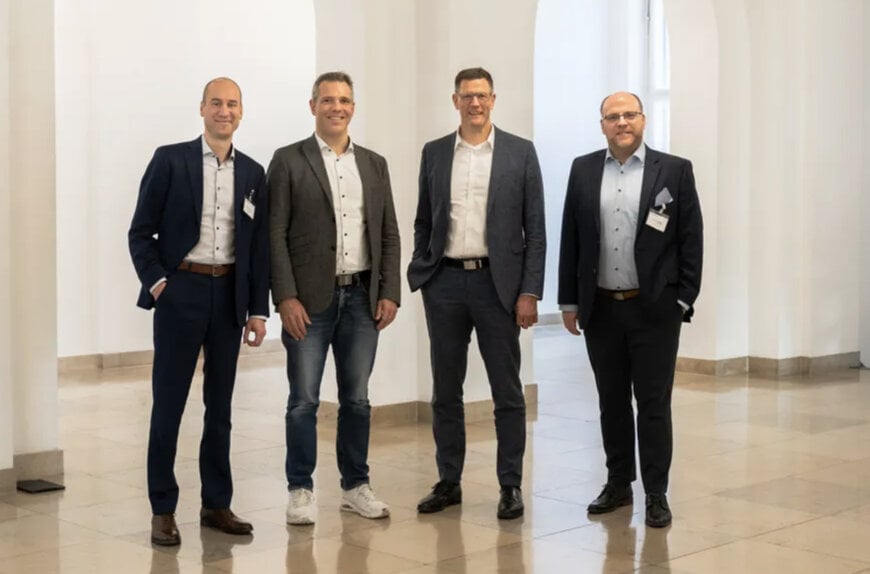
The RemODtrAIn project addresses how rail operators can safely manage train movements within depots through remote operation and AI-supported obstacle detection. These use cases include stabling, provisioning, and positioning of vehicles—tasks that require high availability and precise situational awareness. The consortium, coordinated by Siemens Mobility, builds on results from AutomatedTrain and safe.trAIn while continuing technical cooperation with Deutsche Bahn.
Remote operation supported by 5G connectivity
A long-distance ICE 4 was equipped with advanced 5G communication technology, enabling remote operation from a central depot control station. The system was tested under varying public-network conditions to validate its robustness. The objective was to enable secure and highly available command transmission without requiring dedicated communication infrastructure. The project received €17 million in funding through the “DNS der zukunftsfähigen Mobilität” programme of the Federal Ministry for Economic Affairs and Energy.
Modular architecture and AI-based obstacle detection
RemODtrAIn developed a modular, safety-critical architecture designed for progressive implementation in existing fleets. Vehicle-mounted sensors were defined for universal use across operating modes, supporting both automated and remote-controlled processes. Obstacle detection was evaluated under daily operating conditions on the S-Bahn Berlin network, while communication performance was tested at the Smart Rail Connectivity Campus in Annaberg-Buchholz using a regional Desiro Classic. These tests support the long-term goal of enabling reliable digital supervision of train movements in depot environments.
Addressing operational challenges in the rail sector
The consortium focused on providing a technically validated response to several industry challenges, including increased depot capacity, greater operational flexibility and the shortage of qualified shunting personnel. By enabling remote-controlled train movements within confined areas, operators can streamline processes while maintaining safety requirements. The approach also supports the digitalization framework defined by national rail strategies.
Testing pathway and system integration
The project defined the requirements for remote-controlled operations, specified the architecture for the safety-critical system and initiated real-environment trials. A long-distance train served as the reference platform for remote provisioning, and retrofit solutions for regional fleets were examined. The validation phase for vehicle integration is planned for 2028. The communication concept was developed in collaboration with major mobile-network providers, taking into account future integration with satellite-based communication.
Consortium expertise across industry, operations and research
Twelve organizations contributed to the project, including: Siemens Mobility GmbH, Siemens AG, DB AG, DB Fernverkehr AG, DB Systemtechnik GmbH, DB RegioNetz Infrastruktur GmbH, Mira GmbH, Smart Rail Connectivity Campus, the German Aerospace Center, and the Technical Universities of Berlin, Chemnitz and Munich. Their combined expertise covers system architecture, safety engineering, telecommunications, operations and applied research.
www.siemens.com
