
railway-international.com
08
'26
Written on Modified on
ÖBB and Burgenland Energie implement world's first agri-PV plant for rail power
With the commissioning of the agri-photovoltaic plant in Donnerskirchen, ÖBB and Burgenland Energie have established an innovative system for generating green 16.7-hertz traction power.
www.oebb.at
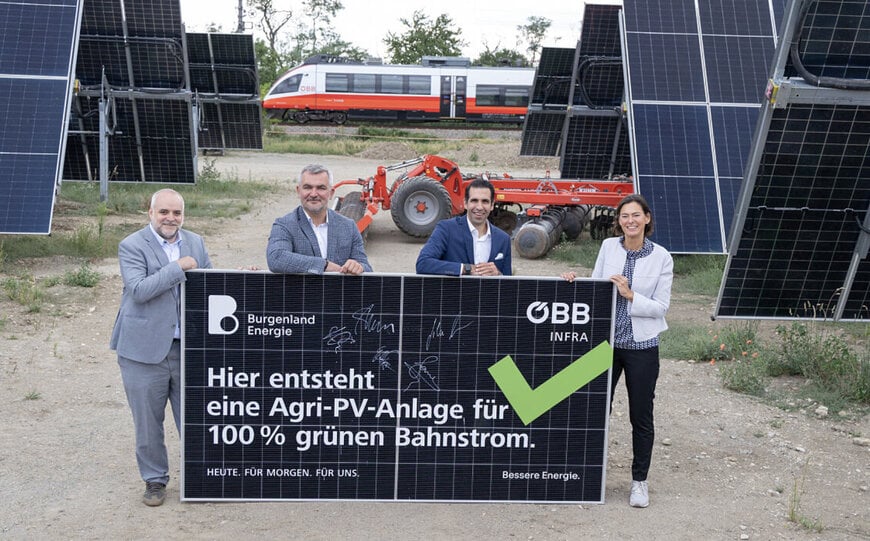
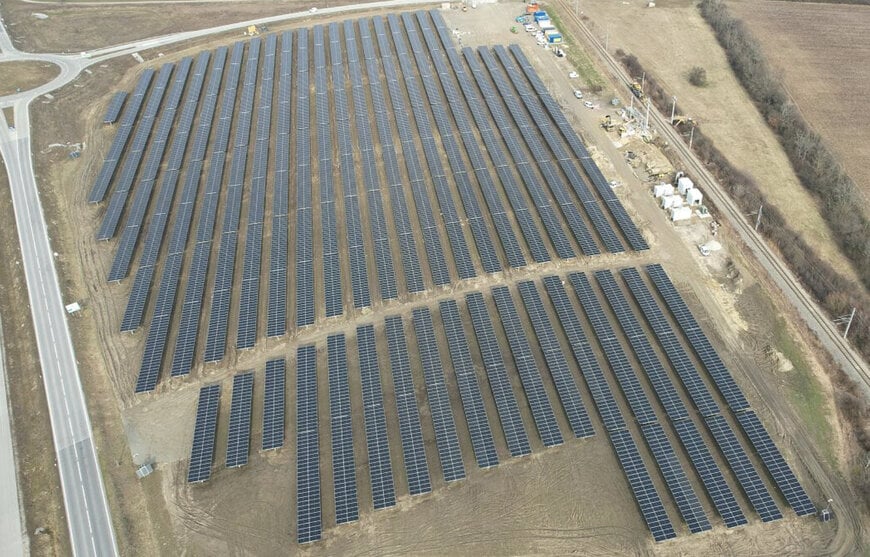
ÖBB and Burgenland Energie have put the world’s first agri-photovoltaic plant with a sun-tracking system for rail power into operation in Donnerskirchen. The project integrates electricity generation based on renewable energy directly into the agricultural use of a seven-hectare area. By automatically aligning the solar modules with the sun's position, energy yield is optimized, while the area underneath the installation continues to be cultivated by the Esterhazy organic farm. Due to its proximity to the Pannonia Railway, the generated energy is fed directly into the rail power grid, which minimizes transmission losses.
Technical specifications and grid integration
The plant has an installed capacity of 6.6 MWp and achieves an annual energy yield of approximately 8.3 GWh. This amount of energy is sufficient to power about 32,500 train journeys between Vienna and Eisenstadt. The technical design avoids soil sealing, ensuring that natural water permeability is maintained and that the plant can be removed without leaving any residue at the end of its service life.
Silvia Angelo, Board Member of ÖBB-Infrastruktur AG, emphasizes the strategic importance: "Our goal is to consistently expand our self-sufficiency in green traction power and to generate energy where it is used. By feeding directly into the grid, we increase supply security while simultaneously reducing energy losses."
Synergy between agriculture and the energy industry
The agri-photovoltaic concept enables triple use of the land: solar energy generation, agricultural production, and the promotion of biodiversity through accompanying planting measures. Matthias Grün, Chairman of the Board of Esterhazy Betriebe AG, explains the operational advantages: "The plants are protected, while the photovoltaics operate more efficiently due to natural cooling – a win for both agriculture and energy."
Stephan Sharma, CEO of Burgenland Energie, adds: "Austria’s first sun-tracking agri-PV rail power plant, and the first of its kind worldwide, points the way toward a renewable mobility future."
Contribution to decarbonizing rail transport
With projects like Donnerskirchen, ÖBB is consistently pushing ahead with the expansion of renewable energy and working to further increase its self-sufficiency in rail power. At the same time, the combination of photovoltaics and agricultural use makes a sustainable contribution to resource conservation and the promotion of biodiversity.
Edited by Maria Brueva, Induportals editor – adapted by AI.
www.oebb.at
