
railway-international.com
13
'26
Written on Modified on
Compact 5G rail router for onboard connectivity
Icomera has launched the XS1, a compact rail-grade router designed to deliver secure onboard connectivity across 5G, trackside and low-Earth-orbit satellite networks for modern rail fleets.
www.icomera.com
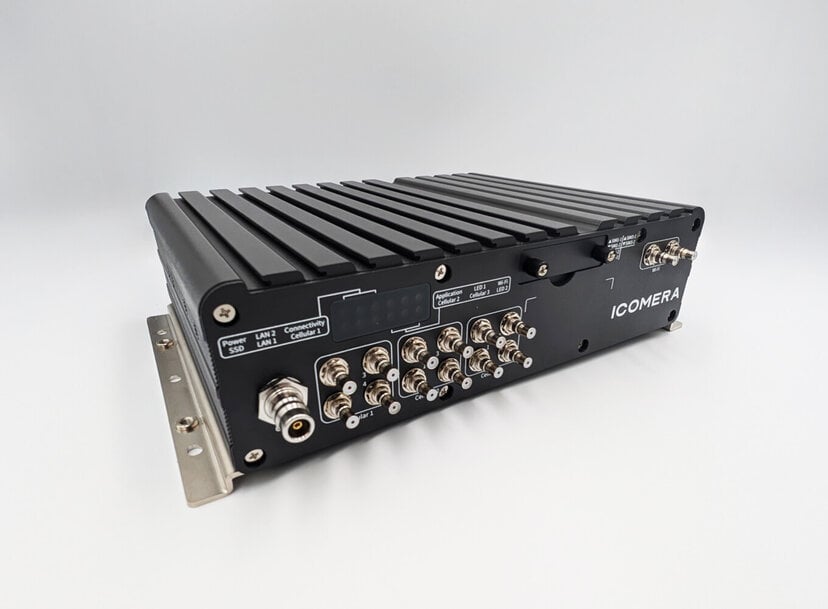
Icomera has launched the XS1, a compact, rail-grade 5G router engineered to provide aggregated onboard connectivity across diverse fleet architectures.
The technical solution involves the integration of cellular, private trackside, and low-Earth-orbit (LEO) satellite networks into a unified communications layer. This system addresses the requirement for reliable data transmission and simplified fleet modernization across space-constrained passenger rail sectors.
Next-Generation Telemetry in the Digital Supply Chain
The relevance of this routing technology stems from the increasing complexity of modern transit networks, which require continuous data exchange to support real-time passenger services and operational systems. By operating as a connectivity-focused gateway, the device funnels multi-network telemetry directly into a secure digital supply chain. This approach eliminates the data silos commonly found in legacy rolling stock, establishing an interoperable node within the automotive data ecosystem that can dynamically shift data paths based on network availability and latency parameters.
Aggregated Multi-Network Architecture and LEO Satellite Readiness
The routing platform utilizes a software architecture capable of combining 5G cellular, private trackside radio, and LEO satellite networks—such as Starlink—into a single, resilient connection. This multi-bearer bonding mechanism allows the system to maintain high availability even when traversing deep rural corridors or topographically challenging areas where terrestrial cellular coverage is intermittent. By functioning as a software-defined connectivity layer, the system manages data routing across these disparate networks without requiring independent, localized software setups for each onboard sub-system.
Structural Optimization for Space-Constrained Vehicle Layouts
Unlike heavy computing platforms that require dedicated equipment cabinets, the router is optimized for retrofitting in space-constrained vehicles like metros, light rail, and regional trains. The minimized hardware footprint facilitates a distributed network design, allowing maintenance teams to install the unit within existing overhead or under-seat enclosures. To streamline fleet modernization, the device incorporates dedicated migration interfaces, lowering the labor overhead and re-wiring complexity typically associated with upgrading from earlier-generation communication hardware.
Network Segmentation and Differentiated Onboard Operations
The product expands options for rail operators by establishing a clear distinction between high-performance edge computing routers and connectivity-first communication nodes. While flagship units like the Icomera X7 combine routing with dense built-in processing and storage for multiple application hosting, this compact unit focuses resources strictly on data throughput and link stability. Operating under a managed service delivery model, the platform provides clear lifecycle management from structured customer trials in 2026 through long-term field support.
Additional Context
This section details technical specifications and competitive benchmarking not included in the original product announcement.
This section details technical specifications and competitive benchmarking not included in the original product announcement.
In comparison to standard ruggedized industrial routers from suppliers like Cisco (e.g., Catalyst IR1101) or Moxa, the XS1 is explicitly certified for rail environments under the EN 50155 standard, which dictates strict tolerances for shock, vibration, and wide operational temperature variables. While conventional industrial gateways often require external modems or complex multi-device configurations to handle satellite backhaul, this platform features native LEO satellite protocol integration. Technical benchmarks indicate that multi-bearer bonding protocols can reduce link-failover latency to under 50 milliseconds when switching between trackside networks and LEO satellite constellations, ensuring an uninterrupted data stream that matches the parameters required for automated train operation (ATO) telemetry. Furthermore, by stripping out heavy, non-essential edge-computing processing chips, the unit's power consumption is reduced by approximately 25% compared to high-end application-hosting routers, lowering thermal output and extending the mean time between failures (MTBF) in enclosed train cabinets.
Edited with AI assistance.
www.icomera.com
