
railway-international.com
07
'26
Written on Modified on
Automated Railcar Inspection for Predictive Maintenance
voestalpine Railway Systems develops a camera- and sensor-based platform to enable real-time condition monitoring and data-driven maintenance in rail freight operations.
www.voestalpine.com
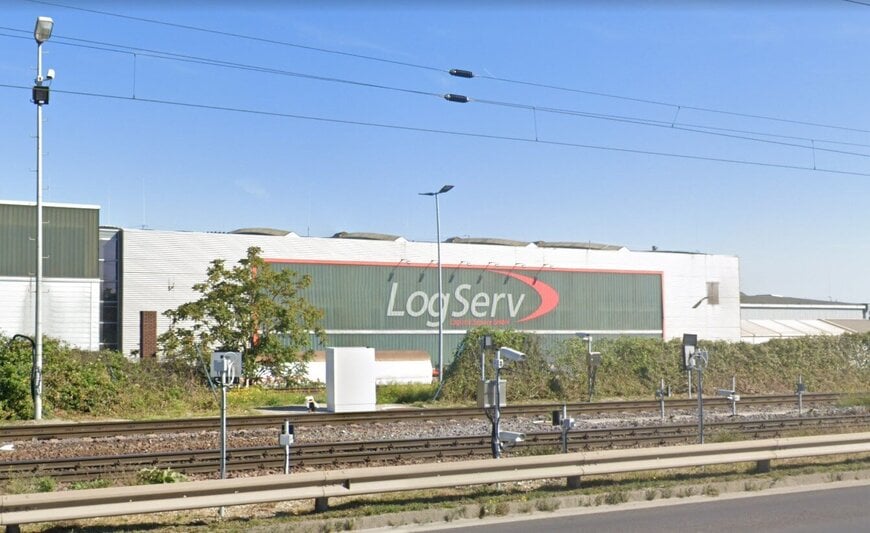
Rail freight operators are under increasing pressure to improve safety, availability, and operational transparency. A newly developed inspection system combines high-speed imaging and data analytics to support predictive maintenance and streamline freight car monitoring.
Addressing Limitations of Manual Inspection
Railways remain a key component of global logistics due to their energy efficiency and cost advantages. However, conventional inspection methods for freight cars rely heavily on manual visual checks. These are time-intensive, labour-dependent, and often limited to spot inspections, reducing their effectiveness in detecting early-stage defects.
To address these limitations, voestalpine Signaling Siershahn GmbH and Logistik Service GmbH (LogServ) initiated a joint development project in 2020. The objective was to create an automated system capable of continuous, non-intrusive condition monitoring of freight wagons in operation.
High-Speed Visual Train Analysis
The resulting system introduces camera-based inspection directly on the track, enabling data acquisition without interrupting train movement. The setup uses five industrial cameras operating in near-infrared or visible light, supported by nine synchronized flash units with wavelengths including 850 nm. This configuration captures detailed images of each railcar from multiple angles, including lateral and top views.
The system operates at train speeds of up to 250 km/h, allowing inspection under real operating conditions. By analysing these images, it identifies structural damage, wear, and irregularities in safety-critical components at an early stage.
Beyond defect detection, the system automates several operational tasks. It reads UIC wagon numbers, revision markings, and QR codes, and identifies hazardous goods labels. It also verifies the correct positioning of components such as tarpaulins, supporting compliance and safety checks during transit.
Additional functionalities under development include colour-based applications such as scrap classification, automated evaluation of load limit grids, and measurement of wheel thickness.
Integrated Fleet Condition Monitoring
Data collected from trackside inspection and additional sensors is consolidated into a central platform, forming part of a broader digital supply chain approach in rail logistics. The system aggregates image data and sensor measurements into a unified interface for fleet managers and maintenance teams.
Users can access individual wagon records, compare historical and current inspection data, and analyse trends over time. This enables clear identification of when and where damage occurred, improving traceability across the automotive data ecosystem and other freight-intensive industries.
Advanced algorithms process continuous sensor inputs to detect both threshold violations and anomalies within normal operating ranges. This supports early fault detection and transitions maintenance strategies from reactive to predictive models.
The platform also provides indicators such as fleet coverage, highlighting wagons that have not been recently inspected. This improves data completeness and supports maintenance planning across large fleets.
Enabling Predictive Maintenance in Rail Freight
The integration of high-speed imaging, sensor networks, and analytical software represents a shift toward predictive maintenance in rail freight operations. By enabling continuous monitoring and data-driven decision-making, the system reduces unplanned downtime and improves asset availability.
The collaboration between voestalpine Signaling Siershahn and LogServ demonstrates how combining operational expertise with digital technologies can enhance inspection accuracy, reduce manual intervention, and increase overall system transparency.
As rail networks evolve to meet higher performance and sustainability requirements, such automated inspection systems provide a scalable foundation for safer and more efficient freight transport.
Edited with AI assistance.
Edited with AI assistance.
www.voestalpine.com
