
railway-international.com
03
'26
Written on Modified on
Expansion of tramway and BRT network in Brest
Brest métropole aménagement has commissioned two new structured transport lines designed by the Mobi-Brest consortium led by SYSTRA France to strengthen low-carbon urban mobility.
www.systra.com
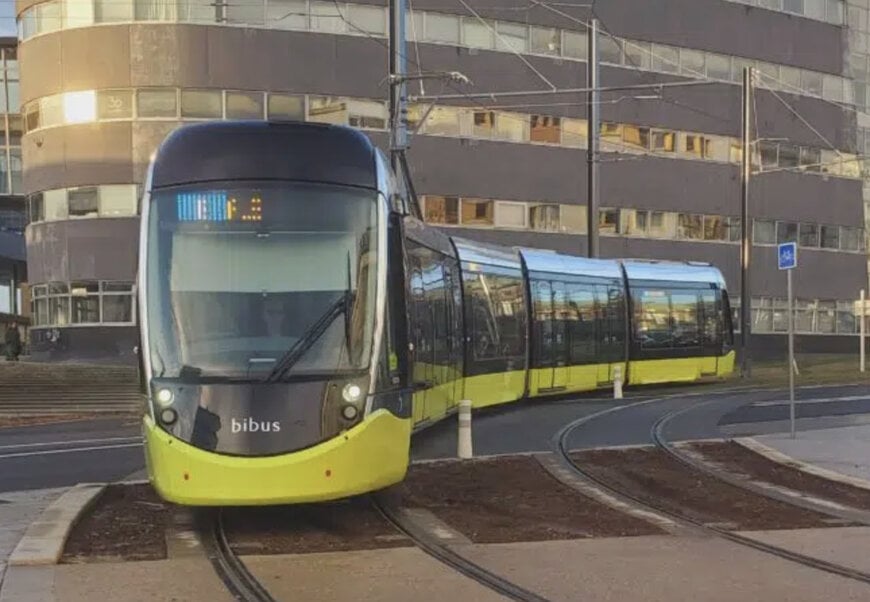
Since 13 February, the Bibus public transport network has expanded with two new lines as part of the “Mon réseau grandit” project, led by Brest métropole aménagement (BMa) as contracting authority. Project management was delivered by the Mobi-Brest consortium, mandated by SYSTRA France, together with SCE, B3i, LA/BA, Super8 and Ferrand-Sigal. The objective is to improve sustainable mobility for the 215,000 residents of the Brest metropolitan area.
Two new structuring corridors
Awarded in 2021, the project includes around ten kilometres of new infrastructure.
Tramway Line B now connects the SNCF railway station to the Cavale Blanche University Hospital. It serves Bellevue, the most populated district in Brest, as well as two campuses of the University of Western Brittany (UBO). The line connects with Line A in the city centre, which has been in operation since 2012 and carries more than 12 million passengers annually.
BRT Line D (Bus Rapid Transit) also departs from the SNCF station and runs to the Lambézellec district. The route operates largely on dedicated lanes to ensure service frequency and reliability, using electric buses.
Together, Lines B and D are designed to carry more than 3.5 million passengers per year.
Complementary infrastructure and modal integration
The project also includes the development of 12 kilometres of new cycle paths and the creation of multimodal interchange hubs throughout the metropolitan area. These measures aim to encourage modal shift and contribute to sustained reductions in traffic-related emissions.
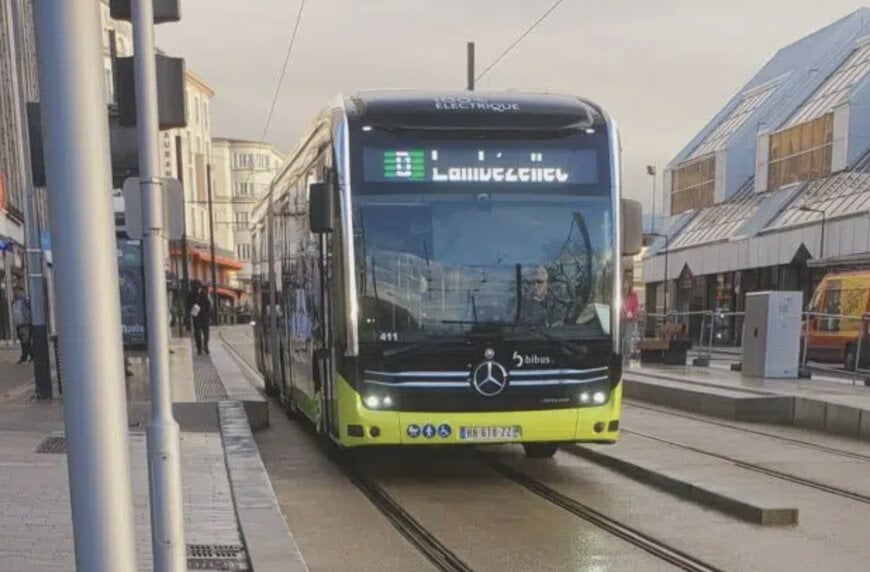
Four major engineering structures
A key feature of the project is the integration of four major civil engineering works. The Francis-le-Blé and Touillic-ar-Ran bridges are dedicated to tramways, pedestrians and cyclists. The Clemenceau and Villeneuve bridges were widened to accommodate the tramway platform alongside existing road traffic lanes.
With these new lines and associated infrastructure, the Brest metropolitan area continues to expand its public transport network and advance its transition toward lower-emission urban mobility solutions.
www.systra.com
