
railway-international.com
30
'26
Written on Modified on
Centralized Control and Safety Protocols in Railway Interlocking Systems
The heart of rail operations, signal boxes by various manufacturers ensure conflict-free train movements through automated route validation and safety logic systems.
www.dbcargo.com
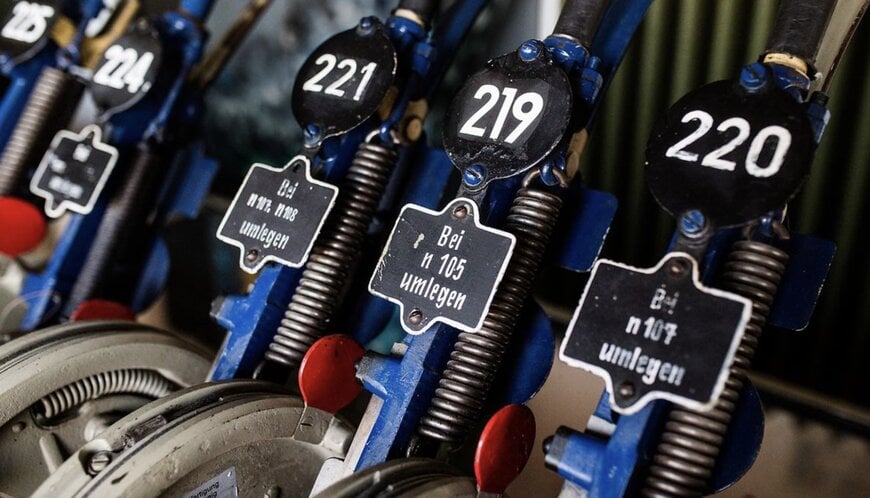
Signal boxes serve as central control hubs for railway stations and track sections, managing points and signals to define secure routes. Before a route is released, the system—or operators utilizing technical support—verifies specific safety criteria: correct point positioning, clear track sections, and secured level crossings. Only after these conditions are confirmed is the route closed and the main signal set to "go."
Safety is maintained via a safety logic system designed for fail-safe operation. In the event of a technical fault, signals default to a "stop" state, and points are locked to prevent hazardous movements. Controlled procedures, including blocking and emergency operation, allow for continued management during system disturbances.
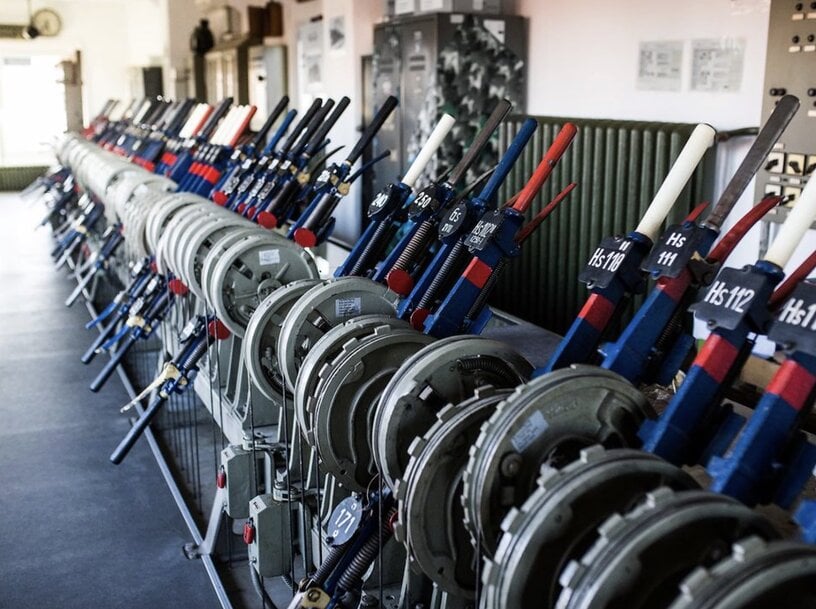
Mechanical signal box in the Kassel marshalling yard: Signal lever row for manual signal box operation - safe routes thanks to mechanical interlocks in the lever mechanism.
Core Technical Safety Elements
The reliability of rail traffic depends on several integrated technical components:
- Route Definition: Synchronization of points and signals to establish a protected path.
- Flank Protection: Use of catch points and blocked secondary tracks to prevent lateral collisions.
- Track Vacancy Detection: Depending on the interlocking type, this is achieved through axle counters, track circuits, or manual local control.
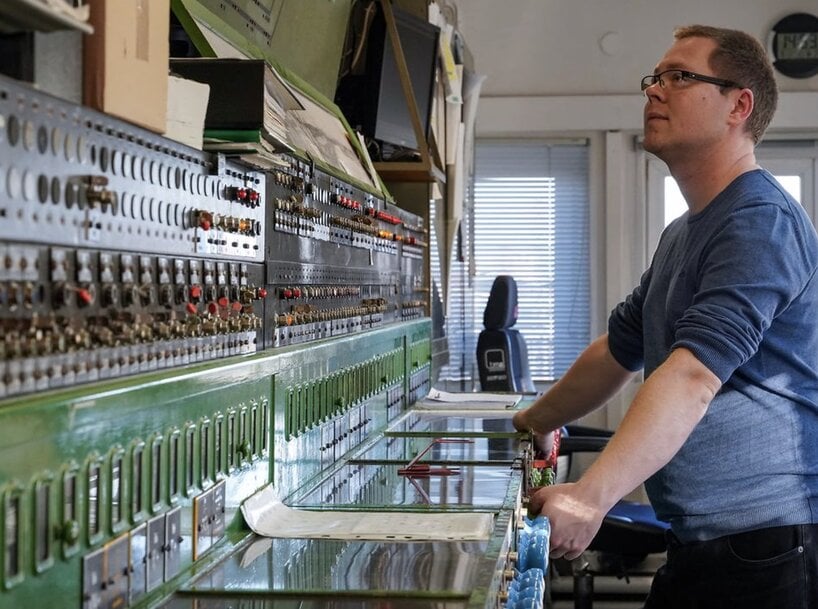
Electromechanical signal box in Rüsselsheim: Mechanic operation with electric drives and lamp panel - safe routes thanks to electrical dependencies.
Evolution of Interlocking Technology
Interlocking systems have transitioned through several technological generations, each increasing automation and control capacity:
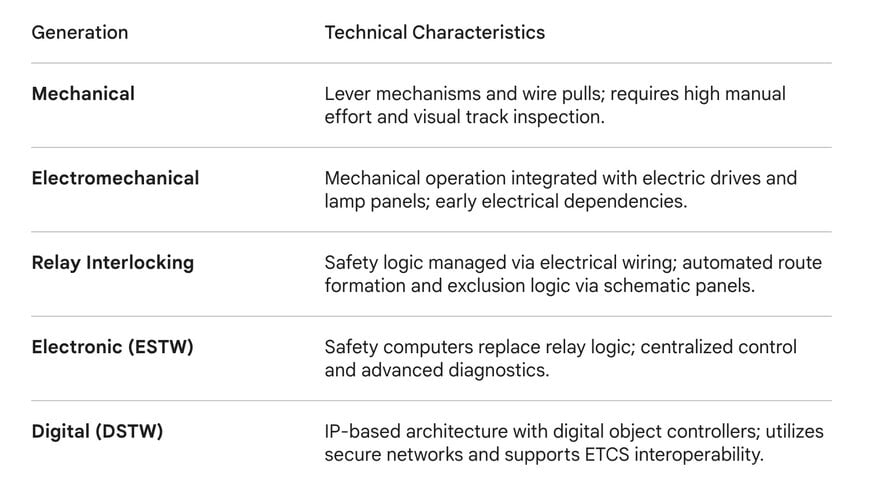
Modernization efforts prioritize increased diagnostic capabilities, remote monitoring, and capacity expansion, particularly when integrated with European Train Control System (ETCS) standards. While automation levels vary across generations, all systems must adhere to standardized safety requirements to ensure reliable rail transport.
Edited by Romila DSilva, Induportals Editor, with AI assistance.
Interlocking systems have transitioned through several technological generations, each increasing automation and control capacity:
Modernization efforts prioritize increased diagnostic capabilities, remote monitoring, and capacity expansion, particularly when integrated with European Train Control System (ETCS) standards. While automation levels vary across generations, all systems must adhere to standardized safety requirements to ensure reliable rail transport.
Edited by Romila DSilva, Induportals Editor, with AI assistance.
