
railway-international.com
10
'26
Written on Modified on
DB InfraGO and Vossloh Extend High-Speed Grinding Agreement
The one-year framework contract aims to optimize the availability of the German rail network through preventive maintenance without service interruptions.
www.vossloh.com
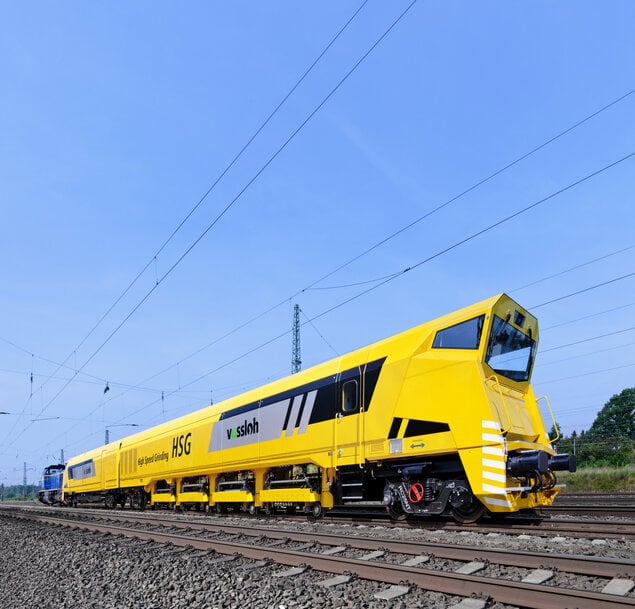
DB InfraGO has extended its framework contract with Vossloh for preventive rail maintenance by one year. Since the collaboration began in 2023, High-Speed Grinding (HSG) technology has been deployed across approximately 40,000 kilometers of tracks within the Deutsche Bahn network. This process enables profiling and inspection without requiring track closures, integrating directly into regular operating schedules. To date, this approach has freed up more than 4,800 hours of additional network capacity.
Preventive Intelligence and Noise Reduction
Imke Kellner, Head of Infrastructure at DB InfraGO, and Oliver Schuster, CEO of Vossloh, emphasized that this smart maintenance is essential for preventing traffic disruptions and ensuring infrastructure reliability. Regular preventive grinding eliminates incipient defects, doubling the lifespan of rails while reducing noise emissions by up to 10 decibels. Interventions rely on a digital ecosystem for data analysis, incorporating laser sensors to monitor longitudinal profiles and eddy-current probes for the early detection of micro-cracks.
Additional Context: Technological Background and Market Dynamics
This section provides technological and commercial background not explicitly detailed in the original press release.
High-density rail networks face the dual challenge of aging infrastructure and increasing transport capacity demands. Traditional rail rectification methods typically require lengthy track closures that severely penalize punctuality. Vossloh's HSG system, capable of operating at speeds up to 80 km/h, allows the maintenance train to fit into the traffic flow without blocking other passenger or freight convoys. Furthermore, mitigating wheel-rail contact noise is a major public health issue for urban and suburban routes. By smoothing the microstructure of the rail surface and removing the hardened layer (without causing overheating or bluing), high-speed grinding helps operators comply with strict acoustic regulations. Finally, the simultaneous integration of diagnostic sensors transforms the grinding operation into a genuine massive data collection effort, facilitating infrastructure managers' transition toward software-driven predictive maintenance.
Edited by Lekshman Ramdas, Induportals editor – adapted by AI.
www.vossloh.com
