
Cork-Rubber Rail Pads Improve Track Durability
Amorim Cork Solutions develops composite rail pads combining cork and rubber to enhance vibration damping, reduce maintenance, and support sustainable rail infrastructure.
amorimcorksolutions.com
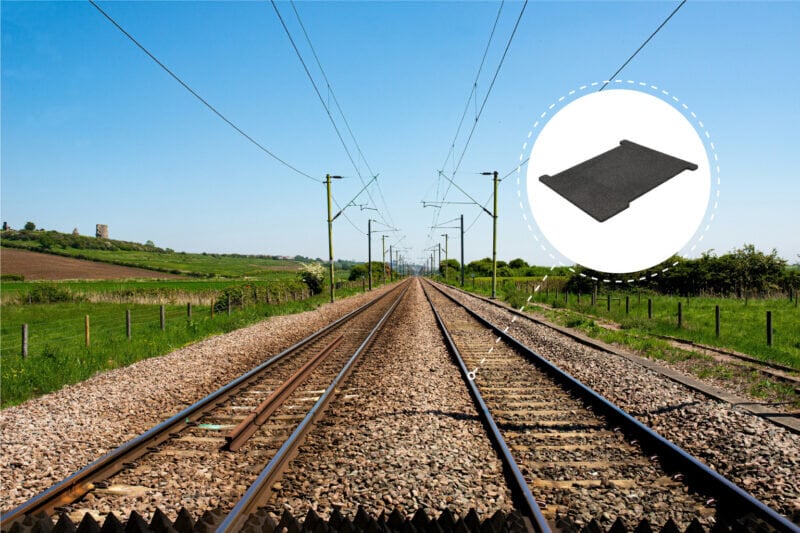
In the evolving landscape of rail infrastructure, the demand for sustainable, high-performance materials is vital. While often a “quiet” component in the system, the rail pad – sitting between the rail and the sleeper – is central to achieving high durability and lower environmental impact. Amorim Cork Solutions has developed cork-rubber composites that address these needs by providing a unique combination of elasticity, damping capacity, and long-term mechanical stability.
Protecting the Ballast through Superior Load Distribution
The primary function of a rail pad is to ensure smooth load transfer and filter out vibrations. Cork-rubber rail pads are specifically engineered to distribute vertical loads and vibrations from passing trains, which directly protects the sleepers and the ballast.
By dampening dynamic loads, these composites reduce track wear and fatigue. This performance arises from the synergistic behaviour of cork and rubber, where the material combination enables high compressibility, effective energy dissipation, and long-term durability. Together, they provide enhanced vibration damping compared to many elastomer-only pads, particularly under the repeated mechanical loading typical of rail traffic.
Operational Stability and Reduced Maintenance
A significant factor in extending the life of track infrastructure is the material’s ability to withstand millions of compression cycles while maintaining stable performance. Cork-rubber pads excel in this area due to several key technical advantages:
Thermal Resilience: Unlike natural rubber, which can soften in heat or become too rigid in the cold, cork-rubber composites exhibit more predictable behavior across a wide temperature range.
Predictable Dynamics: These composites offer consistent damping and stiffness, ensuring that track dynamics remain stable throughout seasonal and daily thermal cycles.
Fatigue Resistance: These composites are engineered to withstand millions of load cycles with minimal stiffness drift, demonstrating superior resistance to aging and oils while maintaining stable rail-seat stiffness over their entire service life.
This stability means the track requires fewer adjustments and repairs, directly resulting in lower maintenance needs and reduced track downtime.
A Sustainable and Resilient Choice
By integrating renewable, carbon-negative cork into technical composites, Amorim provides a solution that aligns with the European Green Deal and Green Public Procurement (GPP) guidelines. For rail authorities, choosing cork-rubber rail pads is an investment in resilient infrastructure that reduces life-cycle costs, protects the ballast, and ensures long-term reliability where nature and technology coexist in harmony.
www.amorimcorksolutions.com
